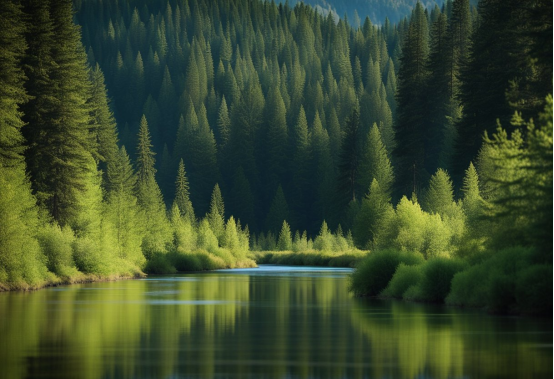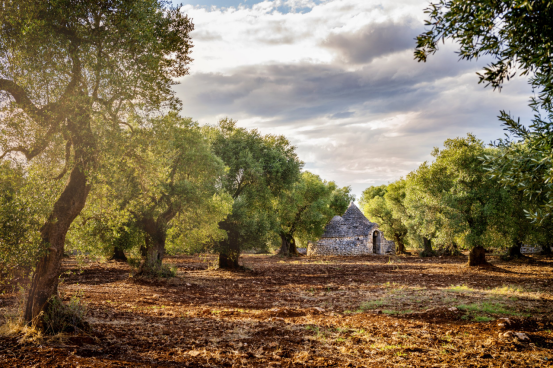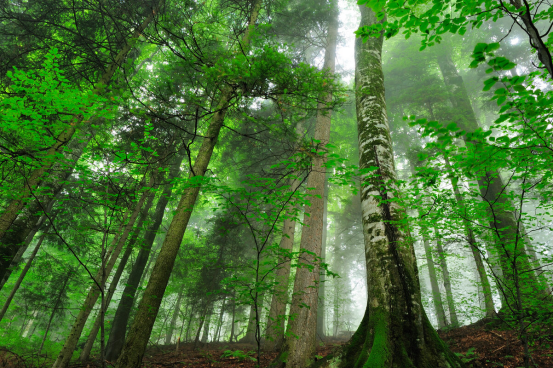
We are used to imagining maps as a collection of cities, marking the world as the coordinates of one building complex after another. However, what really continues time, conceals myths, and accommodates the speechless is often not the city, but the forest.
Forests do not make any sound, but they store all sounds. They are not as surging as rivers, nor as tall as mountains, but they surround human time and memory in a slow, continuous, and almost silent way.
This series will take you into ten legendary forests, which are distributed in different corners of the world, but have one thing in common: they are not just “natural” places, but also cultural wells, the background of myths, migration, prayer and escape.
The forest is not a landscape, it is an extension of consciousness
When you actually step into a forest, it doesn’t immediately please you like the beach, nor does it make you feel awe like the plateau. The forest is dull, obscure, and incomplete. You can’t see its boundaries, and you can’t tell its core.
You have to slow down and slow down again until your pace synchronizes with the growth rate of the tree, until your hearing begins to detect the light sound of dead branches breaking and the whispers of birds flying by, until you realize: you are no longer on the map, but in another scale of time.
Every forest has a character
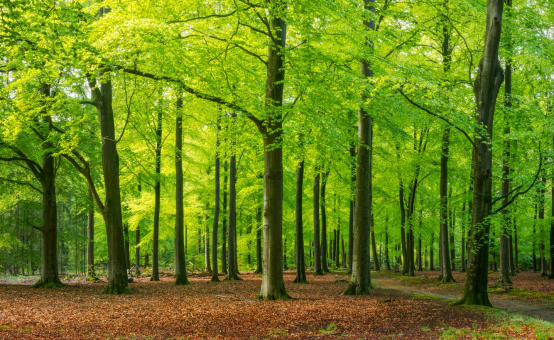
Forests are not just a collection of trees, they have different grammars and rhythms. Some are as dense as a maze, such as Poland’s Bialowieza Forest; some are so sparse that they are almost transparent, such as the camel thorn forest on the edge of Africa’s Namib Desert. Some trees soar up to the sky, such as the Sequoia National Park; others float, grow, and rot in the water, such as the mangroves in Sulawesi.
This “forest map” is not for enumeration, but for listening: listening to the temper of each woodland, its attitude towards humans, its memory of fire, its use of light, and its insistence on silence.
The forest is the last reflection of humanity
After we built cities, drew borders, and erected fences, the forest became a space that humans could not fully define. We got lost in the forest, but we also found religion, herbs, fables, and passages of exile.
They are a way for us to go back to the past. Indians believe that forests are the bones of their ancestors; the pine forests of northern Europe contain the roots of the world tree; and in the Amazon, languages and stories that have never been recorded are still circulating in the treetops.
When a civilization can no longer move forward, it will always look back to the forest, not for romance, but to find its original self.
How to expand the forest map
This series will not be organized by country or geographic logic, but by “character”. We will visit:
Fire-resistant forests : Woodlands that regenerate after burning
Silent forests : green areas that are almost silent, such as boreal forests
Wet forest : a subtropical forest where the rain never stops
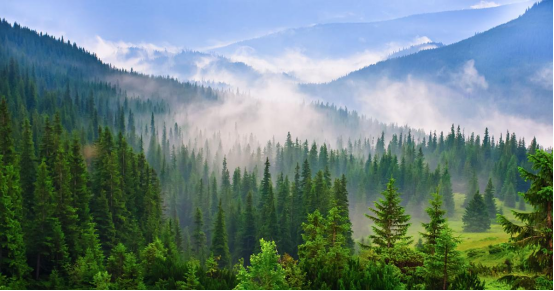
Suspended Forest : Highland Woodlands Floating Like Islands in the Mist
Dying forests : marginal forests being lost to climate or humans
For each piece, we will start with the “geographical temperament,” travel through history, and return to how forests influence human consciousness.
Not to travel, but to understand
You don’t have to visit these forests in person, but their presence changes the way you see the world. Just as you don’t have to fly into the night sky to perceive it, a forest doesn’t need you to be there to convey its meaning.
They are symbols of a way of being – slow, heavy, out of place, but always there.