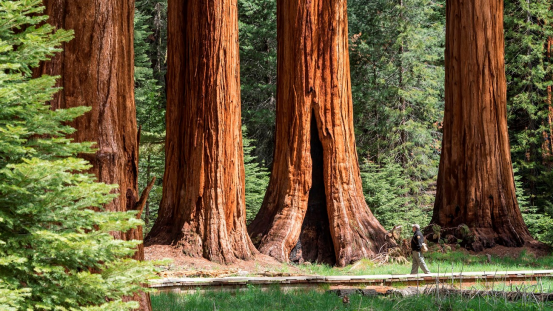
In southern California, between the undulating and extending Southern Sierra Nevada Mountains, there is a place that is hard to look away from – Sequoia National Park, together with the adjacent Kings Canyon National Park, together guard a natural chapter that almost makes people forget about time. The giant sequoias are like silent guardians, standing there, silently recording everything in the past. But many people come and go, only remembering the tall trees and beautiful scenery, but forgetting to ask: Before these trees appeared, who did this land belong to? Who first discovered the secrets of this forest?
Aboriginal Footprints: A Timeline Flowing Through the Forest
Before the national parks were named by the West, people had already lived in the mountains and valleys, streams and forests. They were not just passing tourists, but children of this land. The Monochi, Yokut, Tubatulabal, Paiute and Western Shoshone may have unfamiliar names, but their wisdom was once the only language that circulated on this land.
These tribes have no maps, but they know exactly when to track deer, which streams are suitable for fishing, and even which herbs can soothe tired bodies. They have never used concrete and iron frames to enclose “residences”, but instead used baskets, bows and arrows, and memories to weave life into the shadows of trees. Pine nuts, bearberries, and seeds are all their winter reliance, while tobacco and deerskin are not just supplies, but also the continuation of rituals and spirits.
Today, their descendants still live at the foot of these mountains, quietly and firmly continuing those invisible but real traditions. The National Park Service is also working hard with these tribes to pick up the stories that were long gone.
Who are we? People standing on someone else’s land
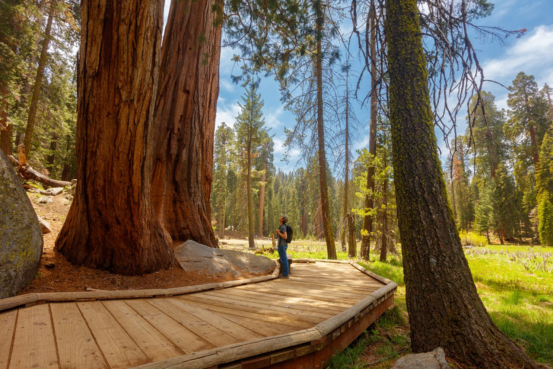
Often, people walk into the forest with excitement and curiosity, but forget to look down at the past life of the land under their feet. Before understanding nature, perhaps we need to understand human existence first—the existence that is earlier and longer than that of tourists.
There is a website called Native Land, which is worth mentioning. It is not a map, but more like a topological map of time and culture. Enter your location, and it will tell you which tribes once lived, resisted, and sang here. We certainly cannot expect a few web pages to answer all the history, but it is a start. Being willing to watch and listen is already respect.
Of course, just “knowing” is not enough. If you really want to respect this land and Aboriginal culture, you should show it in your behavior – whether you are a hiker, a photography enthusiast, or a curious tourist.
“Leave No Trace”: Don’t let nature pay for your journey
Nature doesn’t need us to save it, it just needs us to stop disturbing it. The “Leave No Trace” advocated by Sequoia National Park means, in plain words: you are here, but please don’t let the place know you have been here.
Take away the garbage, don’t set up tents randomly, don’t light fires on the grass – these details may sound like rules, but they are essentially politeness, a response to nature and indigenous wisdom. After all, for thousands of years, they have never asked the forest for more than what they need.
The other side of redwoods: more than just a tree story
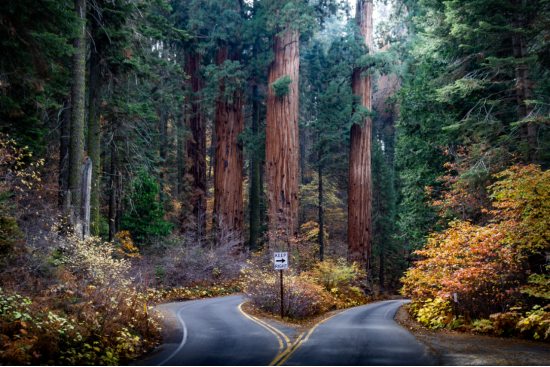
This area is not small. Strictly speaking, Sequoia National Park is only a part of the whole. Kings Canyon National Park, Giant Sequoia National Monument, and Sequoia National Forest together form this huge and complex ecological puzzle.
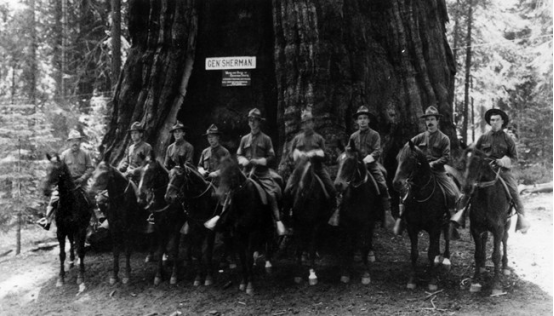
If you only know the General Sherman Tree—yes, it’s one of the largest trees in the world—there are deeper canyons (Kings Canyon is a mile deep), older trails (like the Hundred Trees Trail), and even freer exploration. The unrestricted trails of Sequoia National Forest make for a more humane pace.
Echoes in the town: Culture is not lost
After leaving the park, if you still have time, you might as well go to Exeter to see the murals. The town is small, but it has many stories. The Fox Theater in Visalia, the Botanical Garden in Woodlake, and the small shops on the corners that no one pays attention to are all hiding the way people communicate with nature.
Human art can never get around nature. Trees give us inspiration, but also remind us of our insignificance.
The taste of the land: This is not an interlude, it is the main theme
The Central California region where the redwoods are located is actually an important agricultural belt in the U.S. This means that in addition to the scenery, there is also a smell here – a real, earthy, sun-kissed smell.
You can find the most simple sweets at Reimers Candies in Three Rivers, and you can also taste the almost handmade ritual chocolates at Staffords Chocolates in Porterville. Supporting these local shops is not just about consumption, but also about telling yourself with actions: I care about this land.
The final stroke: not a journey, but a farewell gaze
Most people who enter Sequoia do so with awe, but not many truly walk out with a sense of responsibility. This is not an accusation, but a reminder.
Sequoia National Park is not a photo background, nor a hiking check-in place, it is more like an old man who has gone through generations and is still standing. It waits for you quietly, maybe not speaking, but it tells stories.