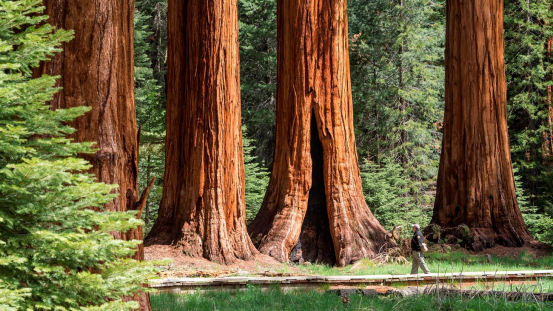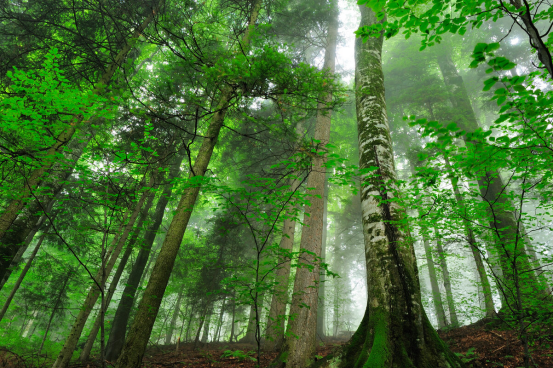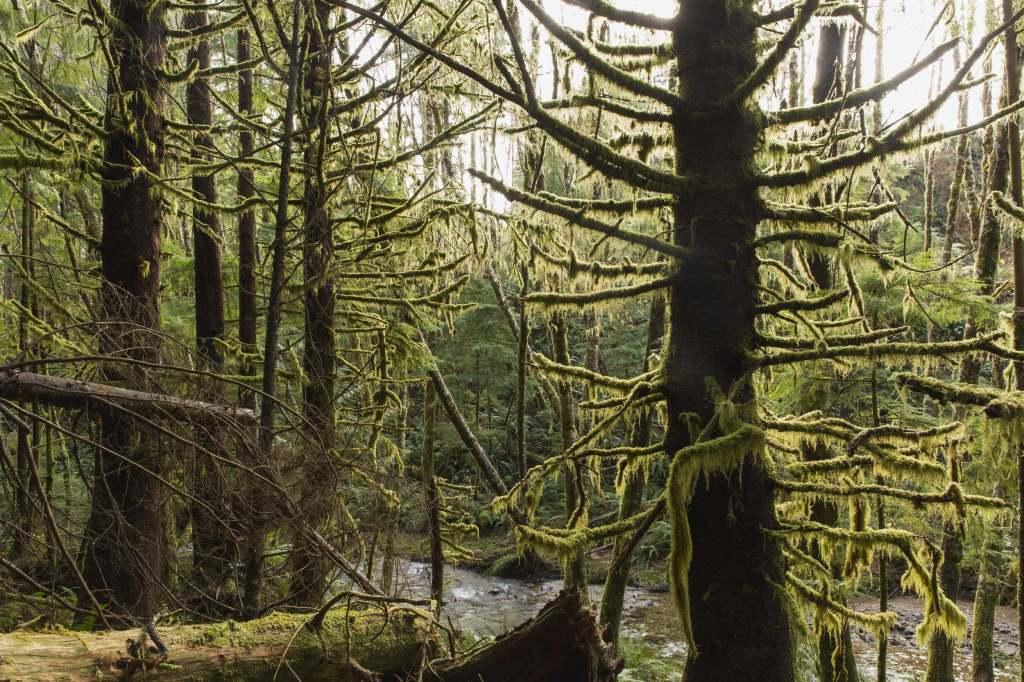
Imagine you are standing in the middle of a primeval forest.
It might be a damp, cold, moss-covered temperate rainforest in the Pacific Northwest,
or it might be a hot, dense, and almost opaque tropical jungle.
Close your eyes. What do you hear?
The rustling of leaves in the wind?
The occasional birdsong in the distance?
The crisp sound of a dry twig breaking underfoot?
We often associate forests with “quiet”—a
refuge from city noise, a place where we can find peace of mind and body.
But this tranquility might just be an illusion created by human senses .
If we could speed up time, magnify the scale, and hear different frequencies,
the forest before us would look more like a trading floor during a stock market crash:
crowded, noisy, full of competition, and surprisingly intense.
The forest isn’t silent.
It just doesn’t intend for you to understand it.
Underground Exchanges: The Hidden Economic System Among the Trees
We often see a romantic statement in popular science articles:
“There is an underground internet in the forest called the Wood Wide Web.”
This analogy is eye-catching, but reality is far more complex than a “natural fiber optic network.”
Deep beneath your feet, an ongoing resource negotiation is underway .
Mycorrhizal networks: the true protagonists connecting everything
are interconnected through
a network of mycorrhizae formed by fungi . These fine, hair-like fungal hyphae link the roots of different plants into a giant web.
The key point is that
this is not an ideal utopia where “everyone shares equally,”
but rather a market system centered on exchange .
The “Sugar for Phosphorus” Business: A Real-World Trade in the Biological World
Fungi do not photosynthesize and cannot produce energy on their own;
however, they are extremely adept at extracting minerals from the soil,
such as phosphorus and nitrogen, which are essential for tree growth but difficult for trees to absorb on their own.
Thus, the deal was reached:
Fungi provide minerals;
Trees pay for carbohydrates (sugar).
The study revealed something even more intriguing:
fungi don’t “distribute” resources evenly.
They prefer to allocate nutrients to trees that “bid higher”—that
is, individuals that can provide more sugar.
If a tree
is unable to continue “paying” due to shade, disease, or old age,
the network may reduce its supply to it.
This sounds like a cold, biological version of capitalism .
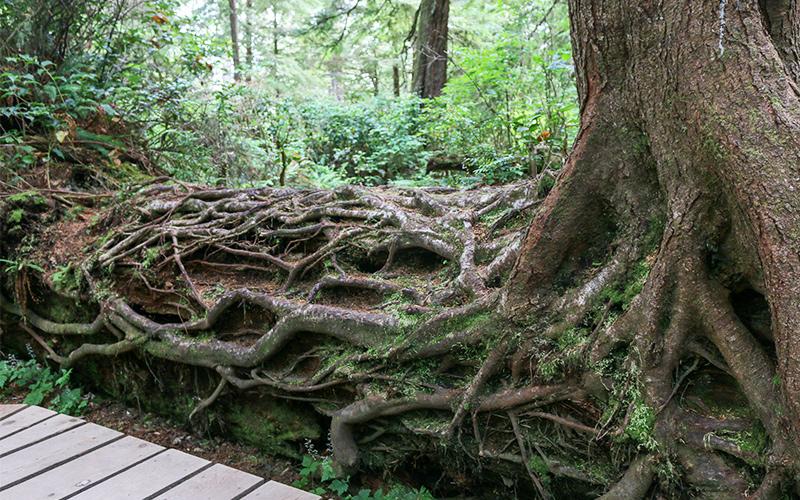
“Nepotism” in the forest: mother trees and their offspring
But even in this brutal trading system,
the forest is not entirely heartless.
Researchers observed that
the largest and oldest “mother trees”
actively transmit additional carbon resources to seedlings via the network.
Even more astonishingly,
they tend to help their related offspring . Trees seem to be able to
“identify” which seedlings carry similar genes through chemical signals in their roots .
Even before the mother tree dies,
it will pour a large amount of its remaining resources into the network,
leaving them for the next generation.
Like a giant about to fall,
emptying his own account at the last moment,
just so his child can survive.
From that moment on,
when you look at a tree stump again,
it may be difficult to simply regard it as “dead wood”.
Why is being in the forest relaxing? It’s not just because of the fresh air.
From underground to our bodies.
Why do humans often feel better in the forest?
The answer provided by Japan’s long-standing “forest bathing” (Shinrin-yoku)
is never as simple as “breathing fresh air”.
Fractal geometry: The most effortless landscape for the brain
Nature is full of fractal structures —
self-repeating patterns with highly similar overall and local forms:
tree branches resemble miniature versions of the whole tree, and
leaf veins resemble miniature versions of branches.
The human brain evolved in such an environment.
Our visual cortex
requires almost no additional energy to process these fractal patterns.
The result is that
looking at a forest can reduce the physiological stress load on the brain.
In contrast,
the straight lines of tall buildings and the strong contrast edges of mobile phone screens
are actually more “brain-intensive”.
This is a true cognitive rest .
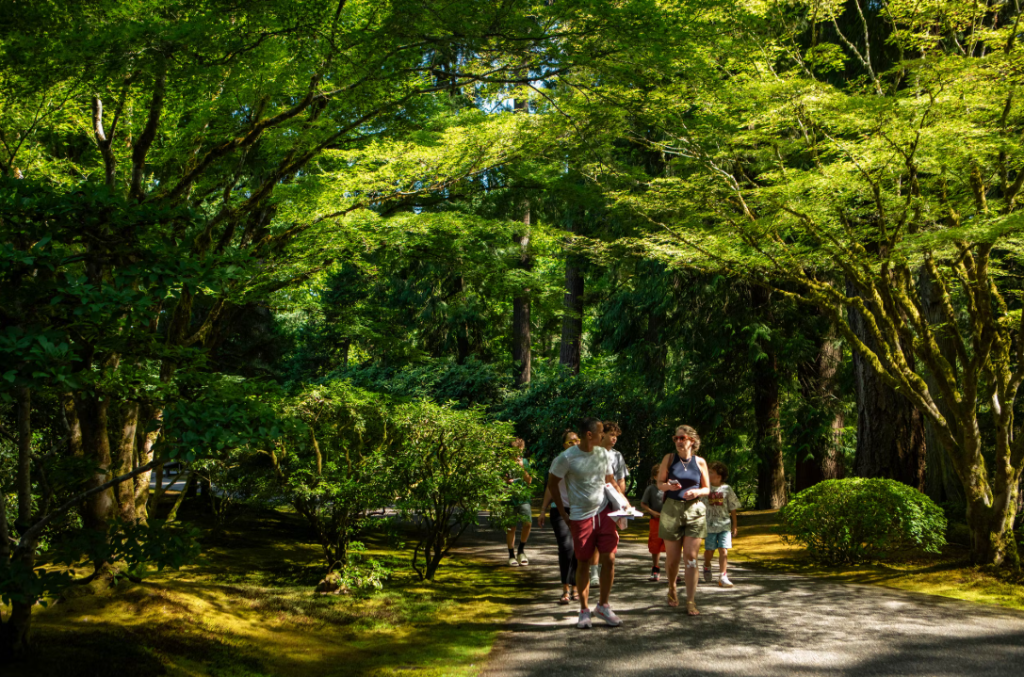
From psychological to real: You have to actually go in.
Of course, this effect comes not only from “seeing.” It also comes from
phytoncides released by trees —
volatile compounds that can affect the immune system and stress hormone levels.
The problem is:
you can’t get these from pictures or videos alone.
To truly enter the deep forest areas far from parking lots and boardwalks,
you must face wind, rain, cold, mud, and the unknown.
Thus, a paradox arises:
to safely return to “nature in the pre-technological era,”
you actually need reliable professional outdoor exploration equipment .
Technology has become our passport to return to nature.
Forests are not the “lungs” of the Earth, but more like its heart.
We often say that forests are the “lungs of the earth,”
but strictly speaking, this is not an accurate metaphor.
Mature forests release oxygen during photosynthesis,
but also consume almost the same amount of oxygen during decomposition and respiration.
If we must find a more suitable analogy,
forests are more like the heart of the earth.
Biological pumps: the engines that “pump” seawater inland.
A seemingly simple question:
How does rainwater travel from the ocean to the interior of the continent?
According to the logic of gravity,
water should only flow towards the sea, not the other way around.
” biological pump theory ” proposes that
forests release water vapor into the atmosphere through transpiration,
creating updrafts
that lower the surface air pressure,
acting like a vacuum pump to draw moist ocean air inland.
The Amazon rainforest is a prime example.
It doesn’t just “wait” for rain; it actively creates “
aerial rivers “
that cross the continent , delivering moisture to farmland thousands of kilometers away.
Once the forests disappear:
the pumps stop, the air pressure equalizes, and
the interior of the continent begins to dry up.
If you are interested in wetland ecology and water cycles, I recommend reading this wetland blog to gain a deeper understanding of how wetlands play a key role in regulating the water cycle and supporting biodiversity.
When you step into the forest, you’re actually stepping into a city moving at a slower pace.
So next time you step into the woods,
perhaps try a different perspective:
Don’t just think of it as a row of standing “wooden statues”.
This is a city that moves in slow motion :
A trade game is unfolding in the soil;
Chemical distress signals are floating in the air;
Above our heads, a huge water-powered engine was running silently.
Will this ruin the romance of the forest?
For me, quite the opposite.
It made me feel small—
not in a crushing way, but
in awe, like standing before an ancient machine that has been running for millions of years
without any human intervention .
Perhaps the forest was never quiet.
It’s just that we finally learned to listen.