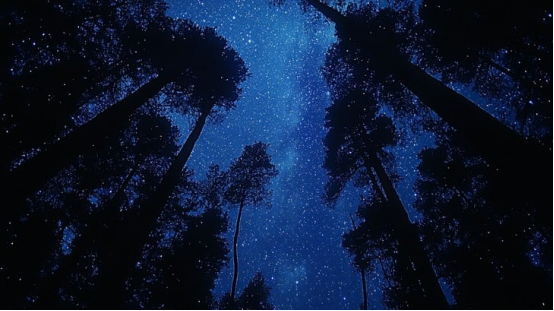
Leaving the city’s perpetual twilight behind for the deep, authentic darkness of a forest is a transformative experience. Under a canopy of leaves, the night sky reveals its true splendor—a brilliant tapestry of stars, planets, and galaxies that urban life obscures. This guide is your complete resource for planning and enjoying an unforgettable night of stargazing, reconnecting with both the cosmos above and the earth beneath your feet. We will explore the “why” behind this magical escape and the “how” of making it a safe, comfortable, and awe-inspiring adventure.
Why the Forest is the Ultimate Stargazing Sanctuary
While any remote location is better than a city for stargazing, a forest offers a uniquely immersive environment. The primary reason is the near-total absence of light pollution—the artificial glow from cities that washes out all but the brightest celestial objects. In the heart of a forest, the darkness is profound, allowing your eyes to fully adapt and perceive the faint, shimmering light of the Milky Way, distant nebulae, and fleeting meteors.
The Science of Dark Skies
Light pollution is measured on the Bortle Scale, which ranks sky darkness from 1 (excellent dark-sky site) to 9 (inner-city sky). Most cities fall in the 7-9 range, where only the moon, planets, and a few bright stars are visible. A remote forest can offer a Bortle Class 2-3 sky, revealing thousands of stars and the detailed structure of our galaxy. This natural darkness is crucial for both amateur astronomy and for the health of nocturnal wildlife.
City vs. Forest Stargazing: A Comparison
| Feature | Stargazing in the City | Stargazing in the Forest |
|---|---|---|
|
Sky Visibility |
Heavily obscured by light pollution. Only the brightest stars, planets, and the moon are visible. | Crystal clear on a good night. Thousands of stars, the Milky Way, constellations, and meteors are visible. |
|
Ambiance |
Constant background noise from traffic and city life. Artificial light is ever-present. | Peaceful and quiet, punctuated by the natural sounds of crickets, owls, and rustling leaves. |
|
Experience |
Limited and often frustrating. The true scale of the universe is hidden. | Awe-inspiring and immersive. Fosters a deep connection with nature and the cosmos. |

Planning Your Perfect Night Under the Forest Stars
A successful stargazing trip requires more than just heading into the woods after dark. Careful planning ensures your safety, comfort, and the best possible viewing experience.
Choose Your Location Wisely
Seek out national parks, state forests, or designated “Dark Sky Parks” that are far from major urban centers. Use online light pollution maps to find the darkest areas near you. When you arrive, look for a clearing, a meadow, or a spot by a lake that offers an unobstructed view of the sky, free from a dense tree canopy.
Timing is Everything: Weather and Lunar Cycles
The two biggest factors for a clear view are weather and the moon. Check the forecast for a cloudless night. For the darkest possible sky, plan your trip around the New Moon. During this phase, the moon is not visible in the night sky, so its brightness won’t wash out fainter stars and the Milky Way.
Safety and Regulations
Always let someone know your exact location and your expected return time. Check park regulations for nighttime access, parking, and any campfire restrictions. Pack a fully charged phone and a portable power bank, but be aware that you may not have cell service in remote areas.

Essential Gear for Your Forest Stargazing Adventure
While you can enjoy the stars with just your eyes, the right equipment enhances the experience and ensures you stay comfortable and safe.
The Stargazing Toolkit
Binoculars are a fantastic starting point for any amateur astronomer. A good pair (e.g., 7×50 or 10×50) can reveal the craters of the moon, Jupiter’s four Galilean moons, and the fuzzy glow of the Andromeda Galaxy. A star chart or a stargazing app on your phone (used in night mode) can help you identify constellations and planets.
Comfort and Safety Checklist
-
Red-Light Flashlight:
A flashlight with a red filter is essential. Red light does not ruin your night vision, unlike the harsh glare of white light. -
Warm Clothing:
Even on summer nights, temperatures can drop significantly. Dress in layers, and bring hats and gloves. -
Seating/Blankets:
A comfortable camp chair or a thick blanket will save you from a stiff neck and a cold ground. -
Food and Water:
Pack warm beverages like tea or hot chocolate, along with some easy-to-eat snacks. -
First-Aid Kit:
A basic kit for handling minor scrapes or insect bites is always a good idea. -
Navigation Tools:
A map and compass, or a GPS device, are crucial for navigating in the dark.

A Beginner’s Guide to the Celestial Show
Once you’re settled in your dark-sky location, it’s time to look up. The sheer number of stars can be overwhelming at first, but learning to spot a few key features will make the experience even more rewarding.
Finding Key Constellations
Start with easily recognizable patterns. In the Northern Hemisphere, look for the Big Dipper, which can be used to find Polaris, the North Star. Also, search for Cassiopeia (a “W” or “M” shape) and the grand constellation of Orion, the Hunter, which dominates the winter sky.
Spotting Planets, Satellites, and Meteors
How can you tell a planet from a star? Stars twinkle, while planets shine with a steadier light. You might also see the slow, steady crawl of a satellite or the International Space Station. And if you’re patient, you’ll likely be rewarded with the brilliant, fleeting streak of a meteor burning up in the atmosphere.
Witnessing the Milky Way
On a truly dark, moonless night, you will see the Milky Way arching across the sky. It appears as a hazy, luminous band of light—this is the combined glow of billions of stars from the plane of our own galaxy. Seeing it with your own eyes is a humbling and unforgettable moment.

Expert Tips for an Unforgettable Night
Elevate your stargazing from a simple viewing to a profound experience with these professional tips.
Embrace Full Dark Adaptation
Your eyes need at least 20-30 minutes to fully adjust to the darkness. During this time, avoid looking at any white light, including your phone screen. Once your eyes have adapted, you’ll be amazed at how many more stars become visible. This is why using a red-light flashlight is so critical.
Listen to the Forest’s Night Symphony
Stargazing is not just a visual experience. Close your eyes for a few minutes and listen. The sounds of crickets, the call of a distant owl, or the gentle rustling of leaves in the breeze are all part of the immersive experience. It’s a natural soundtrack that connects you to your surroundings.
Try Basic Astrophotography
You don’t need a professional camera to capture the night sky. Many modern smartphones have excellent “night mode” capabilities. Use a small tripod to keep your phone steady, set the exposure for as long as possible (10-30 seconds), and use a self-timer to avoid camera shake. You might be surprised by the stellar images you can capture.
Frequently Asked Questions (FAQ)
-
What is the best time of year for stargazing?
- While you can stargaze year-round, the winter months often offer the clearest, most crisp skies due to lower humidity. However, summer nights are more comfortable and feature the brightest part of the Milky Way for observers in the Northern Hemisphere. Each season offers a different set of constellations to enjoy.
-
Do I really need a telescope to enjoy stargazing?
- Absolutely not! The naked eye is a perfect tool for appreciating the vastness of the sky and learning constellations. A good pair of binoculars is the best next step, as they are portable and offer a wide field of view, making it easy to scan the Milky Way or get a closer look at star clusters.
-
Why is a red-light flashlight so important?
- Human eyes use two types of cells: cones for color vision in bright light and rods for black-and-white vision in low light. Rods are responsible for your night vision but are “bleached out” by white light, taking up to 30 minutes to recover. Red light has a longer wavelength that doesn’t affect the rods, allowing you to see your surroundings without ruining your crucial dark adaptation.
-
Is it safe to be in the forest at night?
- It can be very safe with proper preparation. Always go to a familiar area or scout the location during the day. Inform someone of your plans, bring navigation tools, and be aware of local wildlife. Making a bit of noise as you walk can alert animals to your presence. Most animals will actively avoid humans.
Related Posts
The World’s Most Beautiful Forest Hiking Routes: An Intimate Dialogue with Nature
Embark on a journey through breathtaking forest landscapes, exploring renowned hiking routes that offer a profound connection with the natural…
East Asian Forest Heritage: Exploring China’s Four Great Forests and Japan’s Cherry Blossom Culture
Embark on a comprehensive journey through the most significant forest ecosystems of East Asia. This guide explores China's four legendary…
Forest Streams and Waterfalls: The Ultimate Guide to Nature’s Power and Life
Forest streams and waterfalls are more than just beautiful natural features; they are dynamic arteries of life, shaping landscapes, sustaining…