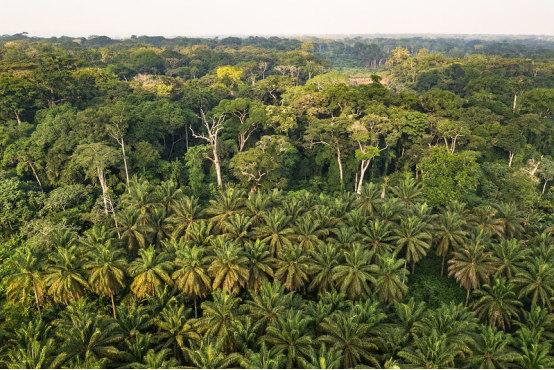
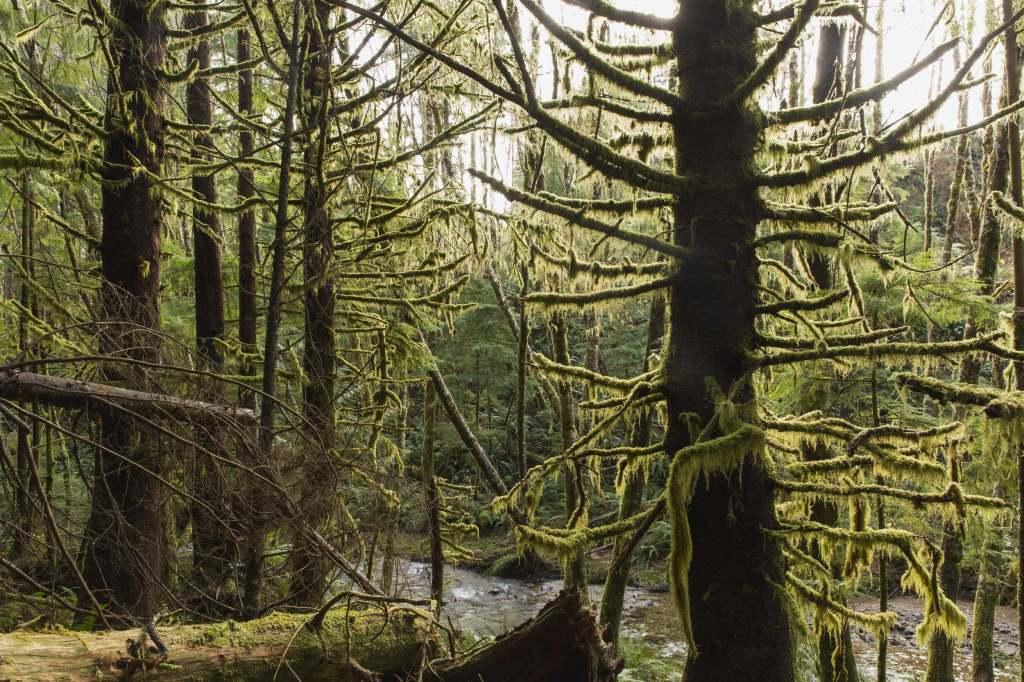
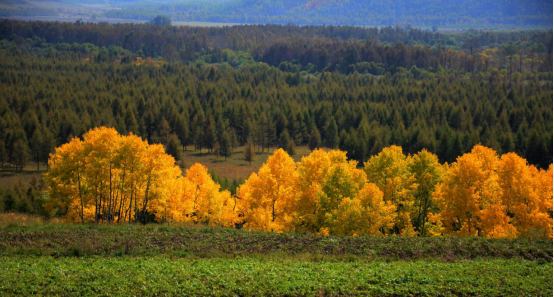
On the border between Poland and Belarus, there lies a seemingly ordinary forest. It lacks the exuberance of a tropical rainforest, nor the austerity of a high-latitude forest belt. It’s not even quite “beautiful”—the trees are plain, and the paths are perpetually damp and muddy. Yet, it’s Europe’s last remaining pristine lowland forest. Standing at the edge of the forest is like standing on the edge of time.
This place is called Białowieża. It doesn’t try to surprise you, it just exists as it was five thousand years ago, slowly, quietly, and completely.
Original, not backward
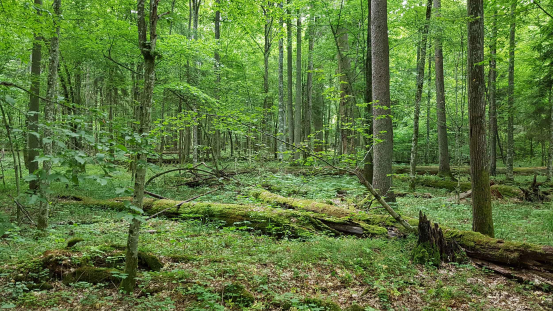
The word “primeval forest” is synonymous with wilderness in many people’s minds, but Białowieża is not chaotic. It is a manifestation of a higher order: there is no human intervention, no uniformity, and everything survives on its own, forming an awe-inspiring stable system.
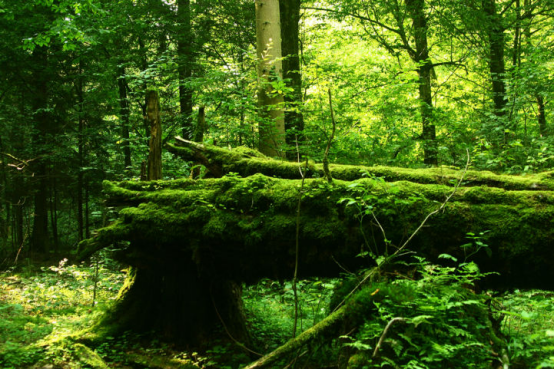
If fallen trees are not cleared, they become a breeding ground for the next generation of plants; mosses, fungi, and lichens cover them, absorbing nutrients bit by bit. No tree is redundant, and no decay is wasted.
This is not backwardness, but an ultimate expression of ecological intelligence.
Silence is a language
If the Amazon whispers, Białowieża is silent. There’s no cacophony of cicadas, and rarely the sounds of large animals scurrying. The most common sound is the rustle of fallen leaves underfoot, or the gentle rustle of wind through the treetops.
This is not a silent void, but a profound balance, where every sound is restrained and every growth is allowed by time.
Here, you don’t feel enveloped, but rather diluted. Your senses gradually intensify, your heartbeat and breathing aligning with the forest’s rhythm. This forest doesn’t speak to you; it simply accompanies you—like an old man, sitting quietly, watching if you can find stillness.
Living Museum
Białowieża is small, yet incredibly dense. It’s the last refuge of the European bison, home to rare bird species and endangered fungi. Scientists call it a “living fossil museum”—not only because of the sheer diversity of species, but also because the networks of relationships among those species remain pristine.
What you see elsewhere is a natural landscape, but here is the natural system itself. The ecological chain is complete, the trajectory of biological evolution is clear, and the changes after a tree falls can be studied for decades. Every inch of land is filled with information, and every species records the dialogue between the past and the future.
Human invisibility
Interestingly, this forest’s preservation isn’t due to our “cleverness,” but rather to our “remoteness.” During the Cold War, it was artificially designated a politically restricted area, effectively shielding it from modern development. It’s not a carefully nurtured “green heritage” but rather a passively preserved ecological artifact.
Now, as you enter, you sense an invisible boundary. It welcomes you in, but forbids you from intervening. Photographing, climbing, picking, and staying overnight are all strictly restricted. The power structure of this forest isn’t designed for humans; we can only be temporary visitors.
Last words: The significance of white space
The true value of Białowieża lies not in its scenery but in its undisturbed existence, a reminder that not all nature needs to be shaped, photographed, or experienced. For some places, the best attitude is to observe from a distance, to stand in awe, or even to leave.
In an age where everything is exploited, it resists with silence, persists with stillness. Like a page unwritten, it demonstrates the value of blank space itself. That is not inaction, but a kind of restrained wisdom.
In the next article, we’ll explore Borneo’s cloud forests , another extreme habitat—high altitude, damp and cold, lingering air, and a dreamlike, flowing world of plants.