Introduction: The green heart keeps beating
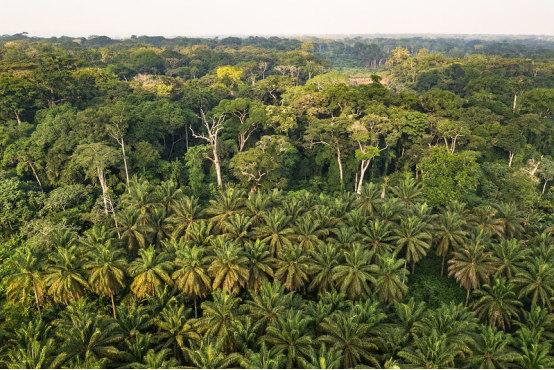
In central Africa, there is a forest so vast that it is almost unimaginable. The Congo rainforest, known as the “second lung of the world”, is more than just a green patch of natural geography. It is like a silent respirator deep in the earth’s chest. With an area of nearly two million square kilometers, second only to the Amazon, it is still a mysterious and unfamiliar existence in the eyes of many people.
It not only houses tens of thousands of species of plants and animals, but also secretly participates in the balance of global climate and the cycle of water. More importantly, this forest is the livelihood of millions of residents and is part of the stories passed down by their ancestors.
Geography: A green empire in the heart of Central Africa
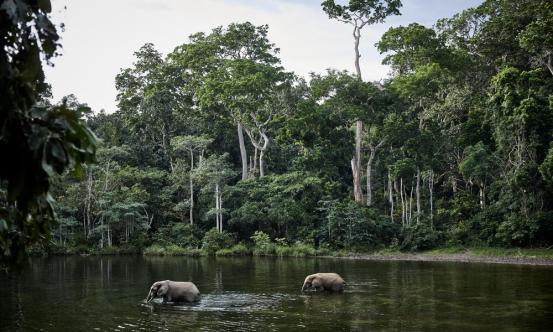
The Congo rainforest, also known as the Congo Basin, has irregular borders, like a stroke of nature’s random strokes. It spans several countries including Cameroon, Gabon, the Democratic Republic of the Congo, the Republic of the Congo, Equatorial Guinea and the Central African Republic, with a total area of 1.8 million square kilometers – you read that right, it is much larger than France.
Let’s talk about the Congo River, the second longest river in Africa, which winds through the basin. It is not a “river” in the general sense, but the vein of an entire ecological circulation system, nourishing countless creatures around it. There are more than 700 fish species – this is an extremely crazy number. Other rivers like the Ubangi River and the Sangha River also nourish this land in different directions.
The Congo’s landscape is also an ever-changing ecological puzzle: bird nests hang on the tops of trees as high as 70 meters, the swamps at the bottom quietly nourish mushrooms and mosses, and there are dotted grasslands and waterfalls interlaced with each other. It is difficult to see its full picture at a glance – like an unfinished forest ode.
Treasure House of Life: The breath of Congo contains the vitality of all things
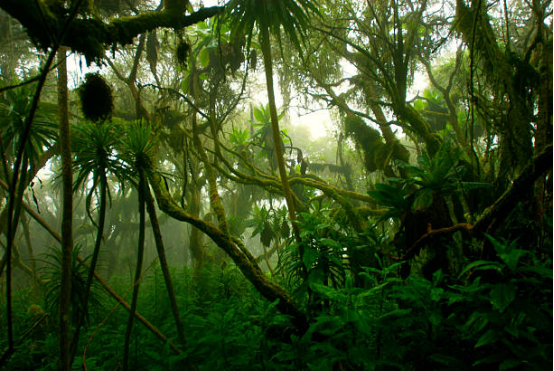
The plant world: silent guardians
There are more than 10,000 species of plants in this rainforest – yes, more than 10,000 species, many of which can only be found here. African mahogany, iroko, ekim… these names may be unfamiliar, but they form the backbone of the Congo’s Great Green Wall. There is also a plant called raffia palm, which the locals use to weave baskets and build roofs. Almost every household cannot do without it.
Wild coffee trees are not rare here. They are not only a symbol of refreshment, but also a dual symbol of medicine and culture.
Animal World: Primitive Tenderness Hidden in the Eyes
If the Amazon is the stage for tropical animals, then Congo is the underground palace of life. There are more than 400 species of mammals, more than 1,000 species of birds, and more than 300 species of reptiles and amphibians living here. Lowland gorillas, mountain gorillas, chimpanzees…they are not just scientific terms, but also “neighbors” in this forest who will look at you and wonder who you are.
The okapi is a fascinating cross between a giraffe and a zebra—just one look at it makes you want to write poetry. There are also forest elephants, Congo peacocks, mandrills, African grey parrots, and even giant pangolins, a crawling scaly dream.
Endangered species: the silent cry of ecological crisis
But there are some names that we may never be able to call out again. Grauer’s gorillas have decreased by 77% in the past 20 years – this is not natural selection, but the speed of humans. Okapi, chimpanzees, forest elephants, Congo peacocks, they are gradually withdrawing from this earth’s ensemble. What is more worrying is that there may be many lives in this rainforest that have not even had time to be recorded and have disappeared quietly.
Challenges abound: The edges of forests are being eroded
Deforestation: A green wound
From 1990 to 2015, Congo lost more than 310,000 hectares of forest each year, and in 2019 it reached 475,000 hectares. Almost every day, a piece of forest fades from the map. Human needs and the roar of machines have made this ancient forest run for its life. Some people need wood, some people open up farmland, and some people build roads and cities. Every time a knife falls, some habitats are taken away.
Mining: The price of metals
Don’t forget, this is where gold, diamonds, and tantalum are hidden—these are essential elements for modern technology products. Illegal or excessive mining not only destroys forests, but also pollutes rivers, forcing already vulnerable communities to migrate. On the surface, it looks like economic activities, but in fact it is a heavy blow to the ecosystem.
Climate change: the invisible enemy
Temperatures are rising, rainfall is no longer regular, and the forest seems to be suffering from a chronic disease. Fires are frequent, plant growth is weak, animal migration routes are disrupted, and even microorganisms have become restless. Pests and diseases are increasing, and invasive species are taking advantage of the situation. Everything seems to indicate that the rhythm of this rainforest is being disrupted by external forces.

Conclusion: What we are protecting is not only trees, but also the future
The Congo rainforest may sound far away, but it is actually closely related to us. Its existence cools the earth, provides nests for animals, and preserves the last poetic wilderness for humans. But now, this green sanctuary is in danger.
We cannot just be silent spectators. Protecting it is not the responsibility of a single country, but a global responsibility. Promoting sustainable land use, supporting community participation, and strengthening ecological protection laws and regulations are not empty words.
Ultimately, the fate of Congo is a mirror. It reflects our attitude towards nature and foreshadows our own future. I hope this forest is not just a green spot on the map, but a real, beating life form that we all protect.