Not all forests are dense and mysterious. Not all gods dwell in shadows.
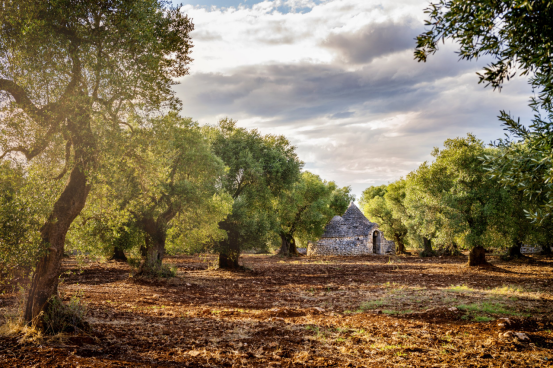
There is a kind of tree whose leaves are gray-green year-round. Sunlight filters through the treetops, leaving the ground covered with sparse, warm spots. This forest prides itself not on shelter but on allowing light to shine through. They do not hide themselves—the olive grove is a rare example of candor in the forest world.
This is a forest of civilization.
This is not a wild, primeval forest, but a vegetation that has grown old alongside humans. Since ancient Greece, the olive tree has been more than just a tree; it has become a symbol, a contract, and a way of life that has been passed down for thousands of years.
Time does not walk, it bears bitter fruit on the tree
No one understands patience better than the olive tree. It triumphs not by growing, but by waiting. You won’t see it grow wildly in a year, and you’ll hardly notice any change in an afternoon. Yet, its growth rings are as fine as a hair, as slow as the handwriting of time itself.
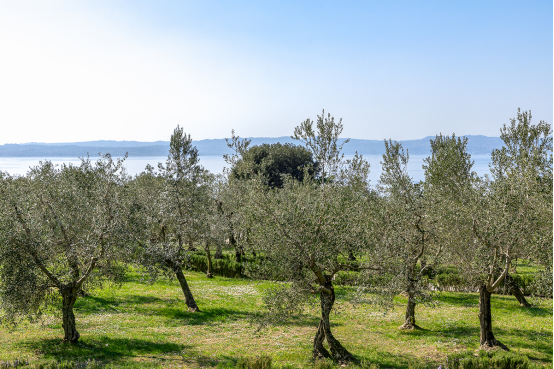
An ancient olive tree can stand by the Mediterranean for centuries. It’s neither old nor young. It simply exists. In this forest, most trees no longer strive for height, but instead sink their energy into their roots, engaging with the limestone, battling salt, and fighting drought.
They live quietly but for a long time, like those old people who never leave, sitting on the stone steps in the sun, watching you come and go.
The wind does not blow, it spreads
The wind in this forest has a unique tone—it carries the dust of Roman ruins, mixed with the glorious echoes of Greek temples. It doesn’t whistle, but whispers. As it winds through the olive grove, it’s like reciting a family story too old, too familiar.
The olive groves were quiet; their silence held a kind of wisdom. Even the birdsong seemed restrained and reserved. Only in the afternoon, when the heat rose and the stones radiated heat, did the world seem to sink into a stillness like a clay pot.
All you can hear are the cicadas.
Humans are not intruders here, but descendants.
Most of the olive trees here were planted, which means that humans are not the despoilers of this forest, but rather its accomplices.
The olive grove is a monument to a partnership: humans provide tools and pruning, the olive trees give back oil and fruit; humans pass on myths and festivals, the olive trees carry memories and the land. There’s nothing “primitive” here, but there’s something even older than primitiveness: trust.
You could say the olive grove is “planted,” but in reality, it is “entrusted.”
They are not wild, but they have never been truly domesticated.
The language of the forest is bitter
Taste a raw olive and you’ll understand the forest’s personality—it’s not inviting. Astringent, bitter, and frown-inducing. This isn’t the kind of fruit that welcomes you; it demands waiting, pickling, and processing before it finally releases its sweetness.
Just like this forest, it is not a shocking spectacle at first glance, but the kind of background scenery that you suddenly find has been deeply embedded in your memory after accumulating over time.
Epilogue: Light is not the protagonist, but an ancient witness
As the sun once again shone through the olive groves, the dappled light and shadows cast across the earth resembled long lines forgotten by ancient Greek poets, recited anew by the wind. There was no beginning, development, or end, only patience and waiting.
What you see are not just trees, not just forests, but the slow but steady footprints of civilization.