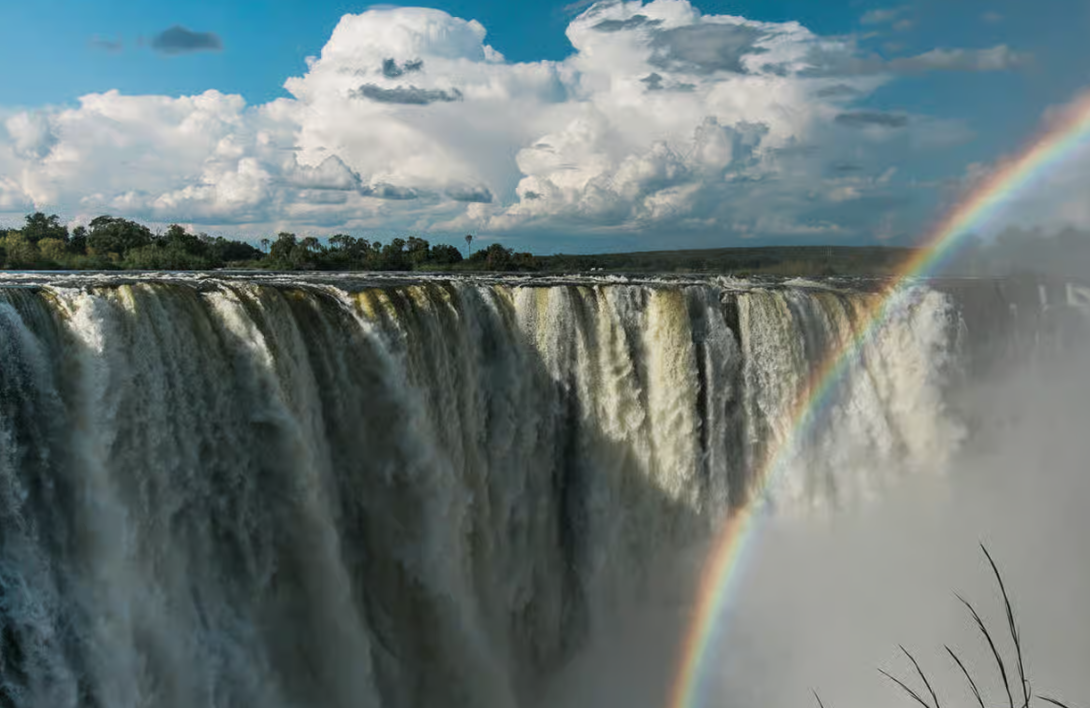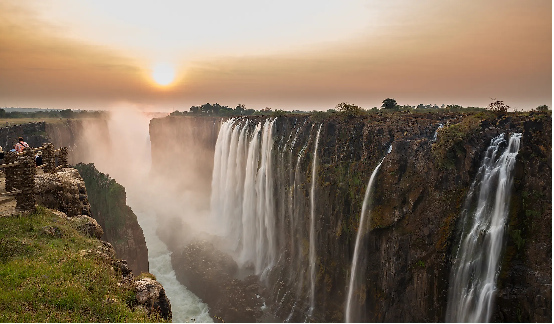
Victoria Falls is not merely a waterfall; it is a thundering spectacle, a force of nature that carves the very landscape between Zambia and Zimbabwe. Known locally and more poetically as Mosi-oa-Tunya, “The Smoke that Thunders,” its story is a powerful confluence of geological time, ancient culture, colonial exploration, and modern tourism. This guide delves into the deep history and vibrant present of this UNESCO World Heritage site, offering a comprehensive look at the forces that shaped this natural wonder and how to experience its majesty today.
The Geological Formation of a Natural Wonder
The creation of Victoria Falls is a story written in stone over millions of years. The foundation of this marvel is a vast basalt plateau, formed around 180 million years ago by volcanic activity. As this molten rock cooled, it developed a network of cracks and fissures filled with softer sandstone.
The Zambezi’s Path of Least Resistance
The mighty Zambezi River, flowing across this plateau, began to exploit these softer sandstone-filled cracks. Through a process known as headward erosion, the river relentlessly wore away the softer rock, leaving the hard basalt walls to form the sheer cliffs of the falls. Over millennia, the river has carved a series of eight successive gorges, each representing a former location of the waterfall. The current location, known as the First Gorge, is simply the latest chapter in this ongoing geological saga. This process continues today, with the river slowly cutting into the next line of weakness, ensuring the falls will continue to evolve for millennia to come.

Indigenous Roots: The Legend of Mosi-oa-Tunya
Long before European eyes witnessed its grandeur, the falls were a sacred and central part of the lives of the local Toka-Leya and Ndebele peoples. They named it Mosi-oa-Tunya, a name that perfectly captures the experience of being near the falls: the colossal plume of mist that can rise over 400 meters into the air and be seen from 50 kilometers away, accompanied by a deafening roar.
A Sacred Site of Worship
For the Toka-Leya people, the falls were not just a landmark but a place of immense spiritual power. They revered it as a site for rituals, ceremonies, and sacrifices to their deities. The constant mist sustained a unique rainforest ecosystem on the cliff edges, which was considered a sacred grove, a place where the physical and spiritual worlds met. The island on the precipice, now known as Livingstone Island, was a particularly sacred spot where community elders would conduct important ceremonies. This deep cultural connection underscores that the falls were never “undiscovered,” but rather an integral part of a thriving cultural landscape for centuries.

A European ‘Discovery’: David Livingstone’s Arrival
The narrative of Victoria Falls shifted dramatically on November 16, 1855, when Scottish missionary and explorer David Livingstone was brought to the sacred island by canoe. Guided by the local people, he became the first European to witness the full scale of the falls. Overwhelmed by its beauty, he famously wrote, “scenes so lovely must have been gazed upon by angels in their flight.”
The Impact of a New Name
In an act typical of the colonial era, Livingstone renamed the falls in honor of the reigning British monarch, Queen Victoria. This act superimposed a European identity onto a landmark with a profound and ancient African heritage. While his detailed accounts and sketches introduced the falls to the Western world, sparking immense interest, the renaming also marked the beginning of a period where the indigenous history and significance were often overlooked in favor of a colonial narrative of discovery and adventure.

Engineering an Empire: The Victoria Falls Bridge
The global fame of Victoria Falls was cemented by an audacious feat of engineering: the Victoria Falls Bridge. Conceived by the British imperialist Cecil Rhodes as part of his vision for a “Cape to Cairo” railway line, the bridge was designed to span the Second Gorge. Rhodes insisted that it be built “where the trains, as they pass, will catch the spray of the Falls.”
A Marvel of Construction
Constructed in England and shipped in pieces to be assembled on-site, the steel arch bridge was completed in 1905. Spanning 198 meters and positioned 128 meters above the Zambezi River, it was a symbol of British engineering prowess and imperial ambition. The bridge not only facilitated the movement of goods and people but also transformed Victoria Falls into a premier tourist destination, making it accessible to wealthy travelers from around the world. Today, it stands as a historic landmark and a hub for adrenaline activities like bungee jumping.
Planning Your Visit: A Practical Guide
Victoria Falls straddles two countries, Zambia and Zimbabwe, and each side offers a unique perspective and experience. Choosing which side to visit, or planning to see both, is a key part of trip planning.
Zambia vs. Zimbabwe: A Comparison
| Feature | Zimbabwe Side (Victoria Falls Town) | Zambia Side (Livingstone) |
|---|---|---|
|
Main View |
Offers views of about 75% of the falls, including the Main Falls. Considered the classic, panoramic viewpoint, especially in the dry season. | Provides up-close, powerful views. You can stand incredibly close to the rushing water, especially at the Eastern Cataract. |
|
Key Activities |
Multiple viewpoints along a well-maintained path, access to the Victoria Falls Bridge, helicopter flights (“Flight of Angels”). | Access to Livingstone Island and the Devil’s Pool (seasonal), the Boiling Pot trail, and microlight flights. |
|
Water Flow |
Has significant water flow year-round, making it a better choice during the peak of the dry season (October/November). | The Eastern Cataract can dry up almost completely during the driest months, reducing the spectacle significantly. |
|
Best Time |
Good year-round, but especially from May to September. | Best during the high-water season (February to June) for maximum flow. Devil’s Pool is only open in the low-water season (late August to December). |
Expert Travel Tips Checklist
-
Get a KAZA UniVisa:
If available, this visa allows tourists to cross between Zambia and Zimbabwe multiple times, making it easy to see both sides of the falls. -
Pack for a Drenching:
Regardless of the season, the spray is intense. A waterproof jacket or poncho is essential. Protect your camera and phone with waterproof cases. -
Choose Your Season Wisely:
High-water season (Feb-Jun) means immense power and spray, which can obscure views. Low-water season (Aug-Jan) means less spray, clearer views, and access to activities like Devil’s Pool. -
Stay Hydrated and Sun-Protected:
The African sun is strong. Bring a wide-brimmed hat, sunglasses, and high-SPF sunscreen. Carry a reusable water bottle. -
Consider a Lunar Rainbow Tour:
For three nights around the full moon, the park stays open late. The moonlight refracting in the spray creates a magical “moonbow”—a rare and unforgettable sight.
Frequently Asked Questions (FAQ)
-
What is the best time of year to visit Victoria Falls?
- The best time depends on your priorities. For the most powerful and thunderous experience, visit during the high-water season from February to June. For clearer views, photography, and water-based activities like the Devil’s Pool, the low-water season from August to January is ideal. The shoulder months of July and August often offer a good balance.
-
Is it better to see the falls from the Zambia or Zimbabwe side?
- Ideally, both. The Zimbabwe side offers more expansive, panoramic views of the main falls year-round. The Zambia side provides a more visceral, up-close experience and is home to the famous Devil’s Pool. If you only have time for one, Zimbabwe is often recommended for first-time visitors, especially in the dry season.
-
What is the Devil’s Pool and is it safe?
- The Devil’s Pool is a natural rock pool right on the edge of the falls, accessible only from the Zambian side during the low-water season. A rock ledge prevents swimmers from being swept over. It is considered safe when done with licensed tour operators who know the exact water levels and safety procedures. It is a thrilling, once-in-a-lifetime experience.
-
What does the UNESCO World Heritage designation mean for Victoria Falls?
- The designation, awarded in 1989, recognizes Victoria Falls as a site of “outstanding universal value.” It acknowledges both its superlative natural phenomena (the largest curtain of falling water in the world) and its importance as a habitat for rare plant and animal species. This status obligates both Zambia and Zimbabwe to protect the site’s integrity from threats like overdevelopment and pollution, ensuring its preservation for future generations.