The Mechanics of Desert Geological Formation
Desert landscapes are not merely vast expanses of sand; they are the result of complex geological processes governed by extreme aridity and persistent wind action. The formation of these regions begins with the weathering of parent rock, which, in the absence of significant moisture, relies on mechanical rather than chemical breakdown.
The Role of Aridity in Sediment Supply
In extremely arid regions, the lack of vegetative cover exposes the lithosphere to direct atmospheric forces. Through thermal expansion and contraction, rocks fracture, creating the raw material—regolith—that wind and gravity eventually transport.

Aeolian Landform Evolution and Dynamics
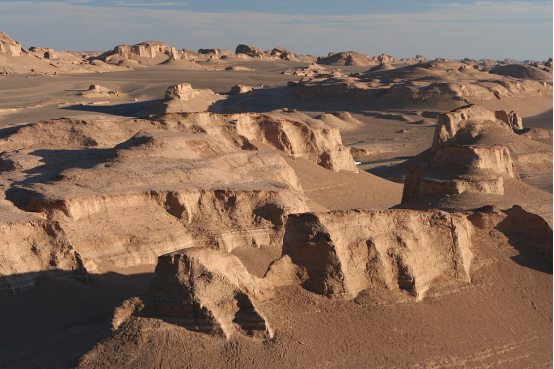
Aeolian processes refer to the erosion, transport, and deposition of sediment by wind. This cycle is the primary architect of the desert, creating distinct landforms such as dunes, yardangs, and loess deposits.
Wind Erosion: Deflation and Abrasion
Wind acts as a geological force through two primary mechanisms. Deflation involves the removal of fine-grained particles, leaving behind desert pavement. Abrasion occurs when wind-borne particles act like sandpaper against rock surfaces, creating unique sculpted features.
| Process | Mechanism | Resulting Feature |
|---|---|---|
| Deflation | Removal of loose fines | Desert Pavement |
| Abrasion | Sand-blasting surfaces | Yardangs |
| Saltation | Bouncing particle movement | Dune Migration |
The Physics of Dune Migration
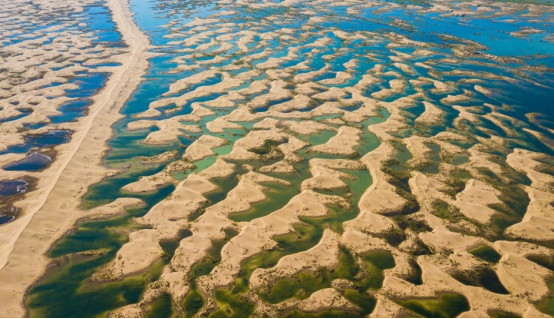
Dunes are dynamic landforms that shift in response to prevailing wind patterns. The leeward side (slip face) is where deposition occurs, while the windward side undergoes erosion. Understanding these dynamics is critical for geological modeling and environmental management in desert regions.
Key Factors Influencing Dune Morphology
- Wind Velocity: Determines the size and shape of the dune.
- Sediment Supply: High supply creates complex star dunes, while low supply creates barchans.
- Vegetation: Even sparse shrubs can anchor dunes, altering their natural movement.
Frequently Asked Questions (FAQ)
- What defines an extremely arid region geologically?
- An extremely arid region is defined by an annual precipitation level that is significantly lower than its potential evapotranspiration, leading to minimal chemical weathering and unique landscape preservation.
- How does wind move sediment across the desert?
- Sediment is moved through three primary modes: saltation (bouncing), creep (rolling), and suspension (fine dust carried high in the atmosphere).
- What is the difference between a yardang and a dune?
- A yardang is an erosional landform carved out of bedrock by wind abrasion, whereas a dune is a depositional landform made of accumulated sand.
- Why is desert pavement important?
- Desert pavement acts as a protective layer, preventing further wind erosion of the underlying soil and helping to stabilize the desert floor.