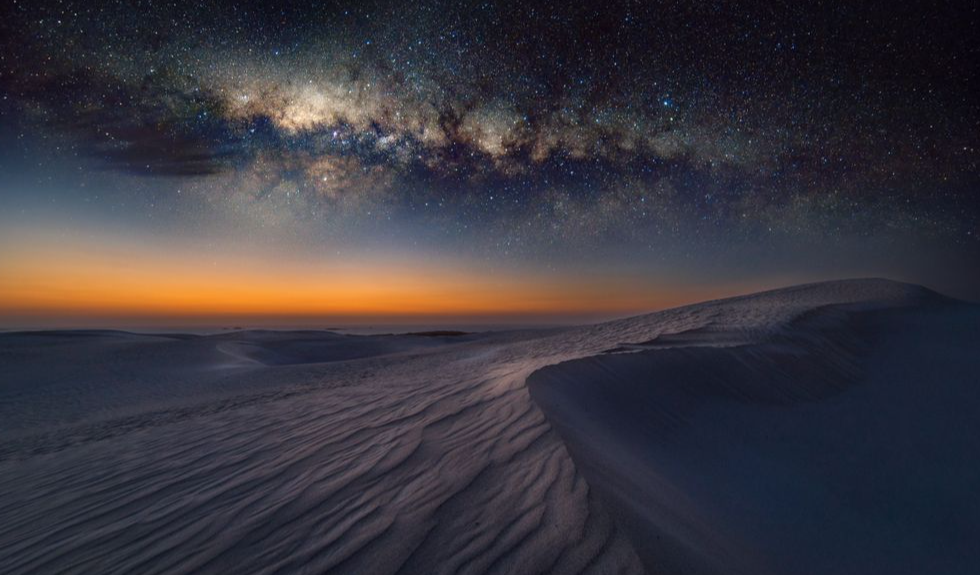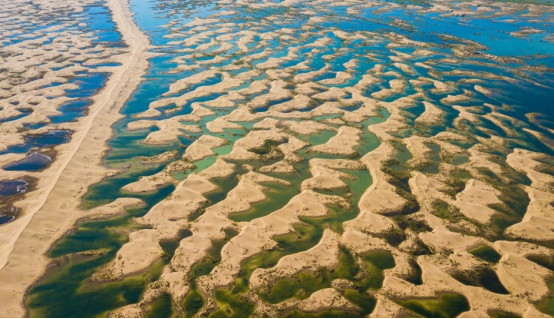
Deserts cover approximately one-third of the Earth’s land surface, yet they remain among the most misunderstood and enigmatic environments on our planet. Far from being mere “wastelands” of sand, these regions are vibrant, evolving landscapes that host specialized life forms, ancient cultures, and groundbreaking ecological experiments. This comprehensive guide delves into the unique characteristics of the world’s most significant deserts, examining their geological origins, their roles in global climate systems, and the human efforts to coexist with and even reclaim these arid frontiers.
The Kubuqi Desert: A Global Model for Ecological Restoration
Located in the Ordos Plateau of Inner Mongolia, the Kubuqi Desert was once a symbol of environmental despair. As China’s seventh-largest desert, its proximity to Beijing meant that its sandstorms frequently choked the capital. However, over the last three decades, the Kubuqi has undergone a radical transformation, becoming a “green miracle” recognized by the United Nations for its successful desertification control.
The Kubuqi Model and Sustainable Development
The success of the Kubuqi lies in a tripartite partnership between the government, private enterprises (most notably Elion Resources Group), and the local nomadic population. This “Kubuqi Model” focuses on turning the desert into an asset rather than a liability. By planting drought-resistant vegetation such as licorice, which improves soil quality, and implementing massive solar power farms, the region has seen a significant increase in rainfall and biodiversity.
- Solar-Thermal Integration: Massive arrays of solar panels provide clean energy while simultaneously shading the ground, reducing evaporation and allowing plants to grow beneath the structures.
- Industrial Chains: The cultivation of medicinal herbs and the development of desert tourism have created thousands of jobs, lifting local communities out of poverty.
- Biological Barriers: Extensive shelterbelts have been planted to block the movement of shifting dunes, effectively shrinking the desert’s footprint.

The Kalahari: The Red Rhythm of Life and Ancient Wisdom
Spanning parts of Botswana, Namibia, and South Africa, the Kalahari is technically a semi-desert or “thirstland.” Unlike the Sahara, much of the Kalahari is covered in reddish sands that support a surprising amount of vegetation, including acacia trees and seasonal grasses. It is a land where the rhythm of life is dictated by the arrival of sporadic, life-giving rains.
Adaptation and Biodiversity in the Thirstland
The Kalahari is home to some of Africa’s most iconic wildlife, all of which have developed extraordinary survival mechanisms. The Kalahari Lion, known for its distinctive black mane, is more nomadic and drought-resistant than its savannah counterparts. Meerkats and various species of antelope, such as the gemsbok, have also mastered the art of extracting moisture from tubers and succulent plants.
The human history of the Kalahari is equally profound. The San people, one of the world’s oldest cultures, have lived in these sands for tens of thousands of years. Their deep knowledge of “bushcraft”—knowing which plants provide water and how to track animals across featureless terrain—remains a testament to human resilience in extreme environments.

The Atacama: Exploring Earth’s Driest Frontier
Nestled between the Andes Mountains and the Chilean Coast Range, the Atacama Desert is widely considered the driest non-polar place on Earth. Some weather stations in the region have never recorded a single drop of rain. This hyper-aridity is caused by a double rain shadow and the cold Humboldt Current off the coast, which prevents the formation of rain-bearing clouds.
A Window to the Universe and Mars on Earth
The Atacama’s unique conditions—high altitude, nearly zero humidity, and lack of light pollution—make it the world’s premier location for astronomy. The ALMA (Atacama Large Millimeter/submillimeter Array) and other telescopes perched on its plateaus allow scientists to peer deep into the origins of the universe. Furthermore, the soil in certain parts of the Atacama is so similar to that of Mars that NASA uses the desert as a testing ground for planetary rovers.
| Feature | Atacama Desert Details |
|---|---|
| Primary Cause of Aridity | Rain shadow effect from the Andes and Chilean Coast Range. |
| Unique Biological Event | The “Desierto Florido” (Flowering Desert) after rare rainfall. |
| Key Resources | Lithium, Copper, and Sodium Nitrate. |
| Scientific Significance | World-class astronomical observatories and Mars analog research. |

The Gobi: A Vast Sea of Rock and History
The Gobi Desert, straddling northern China and southern Mongolia, is a “cold desert” characterized by its rocky terrain rather than endless sand dunes. It is a land of extreme temperature fluctuations, where winters can drop to -40°C and summers can soar above 40°C. Historically, the Gobi was a formidable barrier on the Silk Road, yet it served as a vital corridor for cultural and commercial exchange.
Paleontology and the Wind-Carved Landscape
Beyond its historical significance, the Gobi is a treasure trove for paleontologists. The Flaming Cliffs (Bayanzag) are world-famous for the discovery of the first dinosaur eggs. The desert’s wind-carved “yardangs” and vast gravel plains (known as “hamada”) provide a stark, beautiful landscape that continues to inspire explorers and scientists alike. Today, the Gobi faces challenges from expanding desertification, prompting large-scale conservation efforts like the “Great Green Wall” project in China.

The Namib: Ancient Sands and Coastal Mysteries
The Namib Desert is believed to be the oldest desert in the world, having endured arid conditions for at least 55 million years. Stretching along the Atlantic coast of Namibia, it is famous for its towering red dunes, some of which reach heights of over 300 meters. The contrast between the scorching orange sands and the cold, crashing waves of the Atlantic creates one of the most surreal landscapes on the planet.
Survival on the Edge: The Skeleton Coast
The northern part of the Namib is known as the Skeleton Coast, named for the whale bones and shipwrecks that litter its shores. Survival here depends on the “coastal fog” that rolls in from the Atlantic. Many species, such as the Stenocara beetle, have evolved to harvest water directly from this fog. The Namib is also home to the Welwitschia mirabilis, a plant that can live for over 1,000 years with only two leaves that are slowly shredded by the desert winds.

The Taklimakan: Navigating the Shifting Sea of Death
The Taklimakan Desert, located in the Tarim Basin of Northwest China, is the world’s second-largest shifting sand desert. Its name is often interpreted as “the place of no return.” With dunes that can move dozens of meters in a single storm, the Taklimakan has swallowed ancient cities and sections of the Silk Road throughout history.
Modern Engineering and Ancient Secrets
Despite its reputation, the Taklimakan is a site of intense modern activity. China has constructed several “Desert Highways” that bisect the sands, utilizing complex reed-grid systems to prevent the dunes from burying the roads. Beneath the surface, the desert holds vast reserves of oil and natural gas, as well as remnants of the Loulan Kingdom, offering a glimpse into a lost civilization that once thrived on the fringes of the sand.

Comparative Analysis of Global Desert Ecosystems
While all deserts share the common trait of aridity, their ecological profiles vary wildly based on latitude, altitude, and proximity to oceans. Understanding these differences is crucial for global conservation efforts and for appreciating the diverse ways life adapts to scarcity.
Temperature and Precipitation Variances
Deserts like the Sahara and the Arabian Desert are “subtropical,” driven by atmospheric high-pressure zones. In contrast, the Gobi and Taklimakan are “rain shadow” deserts, created by mountain ranges that block moisture. The Namib and Atacama are “coastal deserts,” where cold ocean currents play the primary role in suppressing rainfall. These varied origins lead to different soil compositions, ranging from the fine “loess” of the Kubuqi to the salt-crusted basins of the Atacama.

The Future of Desert Conservation and Sustainable Tourism
As climate change accelerates, the risk of desertification—the process by which fertile land becomes desert—is increasing globally. However, the lessons learned in places like the Kubuqi offer hope. By integrating renewable energy, sustainable agriculture, and eco-tourism, deserts can be managed in a way that benefits both the planet and local economies.
Sustainable tourism is a key pillar of this future. Travelers are increasingly drawn to the “stark beauty” of the desert, seeking experiences like stargazing in the Atacama, trekking the dunes of the Namib, or exploring the Silk Road ruins in the Gobi. When managed correctly, this tourism provides the financial incentive to protect these fragile ecosystems and the cultural heritage of the people who call them home.
Frequently Asked Questions (FAQ)
- Q1: What is the main difference between a “hot” desert and a “cold” desert?
- Hot deserts, like the Sahara, maintain high temperatures year-round, while cold deserts, like the Gobi, experience extreme seasonal changes, including snow and sub-zero temperatures in winter. The classification depends on latitude and altitude rather than just sand presence.
- Q2: How does the “Kubuqi Model” work for desertification?
- The Kubuqi Model uses a market-based approach where ecological restoration is tied to economic profit. By planting profitable crops like licorice and installing solar panels, the project funds itself while simultaneously fixing the sand and improving the local climate.
- Q3: Is it possible for life to exist in the Atacama if there is no rain?
- Yes. Life in the Atacama has adapted to survive on moisture from the “camanchaca” (coastal fog). Microorganisms also live inside rocks or deep underground where they can access trace amounts of water and protection from high UV radiation.
- Q4: Why are the dunes in the Namib Desert red?
- The red color comes from the oxidation of iron in the sand. Over millions of years, the iron “rusts,” turning the dunes from a pale yellow to a deep, vibrant orange or red. The older the dune, the more intense the red color.
- Q5: Can deserts be completely “fixed” or turned back into forests?
- While total reversal is rare and often ecologically inappropriate, “greening” projects can create stable buffer zones. The goal is usually to reach an ecological balance where the desert is contained and the surrounding land remains productive and biodiverse.