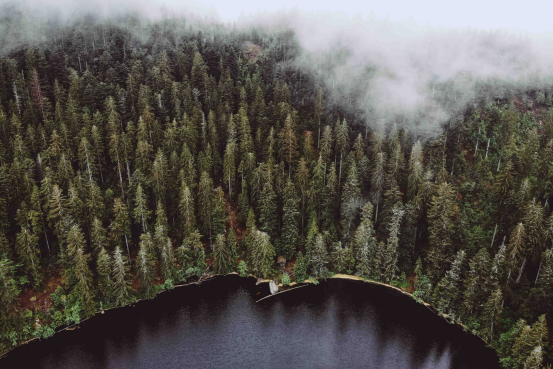
In southern Germany, a dense, ink-black forest stretches for hundreds of kilometers. It’s called the Black Forest (Schwarzwald). The name comes from ancient travelers’ first impression of the woodland: the trees are so tall and dense that sunlight can’t penetrate, and even daytime is like twilight.
In culture, the Black Forest is far larger than it actually is—it is the setting for Grimm’s fairy tales, a reflection of the German national character, and a mythical fortress that has never been completely conquered by reason.
Myths grow from the roots of trees
In the Black Forest, reality and fantasy blur the line. The fairy tales collected by the Brothers Grimm, such as “Little Red Riding Hood,” “Hansel and Gretel,” and “Sleeping Beauty,” are all based on oral traditions passed down in this forest. A common characteristic of these stories is that the forest is always a starting point or a place of loss, a place where the characters’ morality and wisdom are tested.
This narrative pattern stems from the complex emotions ancient Europe held for the forest: a provider of natural resources and a symbol of uncontrollable forces. The German people projected their aesthetics of depth, order, and solitude onto this forest. Thus, the Black Forest became “a memory from before rational civilization.”

The trunk is like a pillar, like a temple
Unlike tropical rainforests, the Black Forest is dominated by coniferous trees, primarily fir, spruce, and Scots pine. These tall, straight trees with distinct trunks form a natural colonnade, creating the illusion of entering a forest temple. Walking through it, you’ll find yourself involuntarily lowering your voice and slowing down your pace.
This sense of vertical power is precisely the spiritual implication that the Black Forest offers: it does not gently embrace you, but rather forces you to introspect with order, silence, and calm. Here, people are insignificant, yet also reflective.
Craftsmanship, watches and rational humor
The Black Forest is not only a fairytale land, but also one of the birthplaces of Germany’s craft tradition. From wood carving and cuckoo clocks to the planning of forest trails, every human activity here is influenced by a deep understanding and restraint of nature.
Germany’s Black Forest clocks are renowned for their complexity and precision, a pursuit of precision and order that is a response to the immense uncertainty of the forest. This forest, never fully domesticated, inspires humanity’s strongest desire to create order.
Rationality and mystery are not contradictory here, but coexist – just like you can meet an old man quietly doing carpentry in a village by the forest, or you can feel an inexplicable “sense of being watched” deep in the forest.
The scenery changes with the seasons
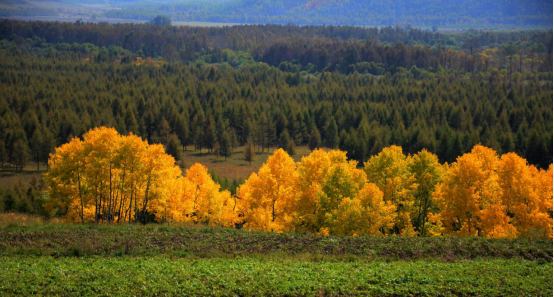
The Black Forest’s beauty is defined by its distinct seasons. Spring snowmelt nourishes the forest lichens, summer brings a vibrant greenery, autumn’s golden and crimson leaves change like a stage curtain, and winter brings a profound silence. Each season has its own unique soundscape: birdsong, wind, falling snow, and the ringing of bells.
This is not a welcoming forest. It refuses to be approached quickly and does not transform to cater to tourists. It is more like a silent elder, carving its own face with time and climate.
National Psychology in the Forest
Philosopher Hegel said that the German way of thinking “possesses a profound forest quality.” This isn’t a metaphor; it’s rooted in the lived experience of the Black Forest. In this woodland, people learned moderation, restraint, and a sense of order, and also developed a keen sensitivity to fairy tales and metaphysical thought.
It can be said that the Black Forest not only shaped Germany’s geographical appearance, but also forged its cultural core: a juxtaposition of mystery and rationality.
Final Thoughts: Learning from the Shadow
We often think that light is the only source of power, but the Dark Forest reminds us that depth, shadows, silence, and even fear can also be sources of wisdom. The forest doesn’t always ask us to go out; sometimes, it just asks us to stop and listen to the sound of the earth beneath our feet.
The Black Forest is not about finding the way, but about making you understand that the ability to grow while being lost is the true sense of direction.