The Spiritual and Ecological Bond in High-Altitude Environments
For millennia, the world’s most formidable mountain ranges have not merely been geographical barriers, but profound cradles of human civilization and spiritual awakening. Deep within the towering peaks of the Andes in South America and the vast, sweeping expanses of the Tibetan Plateau in Asia, indigenous communities have forged an unbreakable covenant with nature. These extreme environments, characterized by thin air, sub-zero temperatures, and rugged terrain, demand far more than mere physical endurance; they require a holistic integration of human life into the intricate web of high-altitude ecosystems. The survival and flourishing of these communities are testaments to human adaptability, rooted in a deep-seated reverence for the natural world.
Unlike modern, industrialized societies that often view nature as a repository of resources to be extracted, the indigenous peoples of both the Andes and the Tibetan Plateau perceive the earth as a living, breathing entity. Every mountain peak, glacial lake, and high-altitude pasture is imbued with sacred significance. This spiritual ecology forms the bedrock of their daily existence, dictating agricultural practices, social structures, and conservation ethics. By examining these two distinct yet parallel cultures, we uncover a universal blueprint for sustainable living—a harmonious paradigm where humanity does not conquer the mountain, but rather, learns to breathe with it.

The Andes: Where People and Nature Live in Harmony
Stretching along the western edge of South America, the Andes form the longest continental mountain range in the world. Here, indigenous groups such as the Quechua and Aymara have cultivated a civilization that thrives in the clouds. Their worldview is fundamentally anchored in the concept of Pachamama (Mother Earth) and the Apus (mountain spirits). In the Andean cosmology, humans are not dominant over nature but are integral threads in a reciprocal tapestry known as Ayni. This principle of reciprocity ensures that whatever is taken from the earth must be returned through offerings, rituals, and sustainable stewardship.
Agricultural Ingenuity: Terraces and High-Altitude Crops
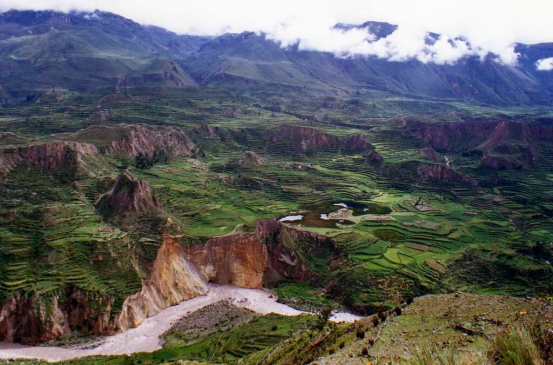
The harsh Andean climate, with its dramatic temperature fluctuations and scarce arable land, necessitated revolutionary agricultural innovations. The indigenous peoples transformed the steep, unforgiving slopes into highly productive agricultural zones through the construction of andenes (stepped terraces). These terraces do more than just provide flat land; they create vital microclimates, prevent soil erosion, and optimize water distribution from glacial runoff. This architectural marvel demonstrates a profound understanding of thermodynamics and hydrology.
- Potato Domestication and Freeze-Drying: The Andes are the birthplace of the potato, with over 4,000 varieties cultivated to withstand specific microclimates. To ensure food security during harsh winters, the indigenous people developed chuño, a freeze-dried potato created by exposing tubers to freezing night temperatures and intense daytime sunlight, allowing them to be stored for decades.
- Camelid Husbandry: Llamas and alpacas are the lifeblood of the high Andes. These native camelids are uniquely adapted to the fragile alpine tundra (Puna). Their padded feet do not destroy the delicate topsoil, unlike the hooves of introduced European livestock, and their highly efficient digestive systems allow them to thrive on sparse bunchgrass.
- Vertical Ecology: Andean communities practice the vertical control of ecological floors. By cultivating different crops at varying elevations—from maize in the lower valleys to quinoa and tubers in the high altitudes—they minimize the risk of total crop failure and ensure a diverse, nutrient-rich diet.
This sophisticated agricultural matrix is deeply intertwined with ritualistic calendars. Planting and harvesting are not merely economic activities but sacred duties, synchronized with the movements of the stars, particularly the Pleiades, and accompanied by elaborate ceremonies to honor Pachamama.

The Mysterious Culture and Nature of the Tibetan Plateau
Often referred to as the “Roof of the World,” the Tibetan Plateau is a vast, elevated expanse in Central Asia, boasting an average elevation of over 4,500 meters. The environment here is characterized by intense solar radiation, permafrost, and an atmosphere containing roughly half the oxygen found at sea level. Yet, amidst this extreme desolation, a rich, mysterious, and profoundly spiritual culture has flourished. The Tibetan people’s relationship with their environment is heavily mediated by Tibetan Buddhism and the ancient, shamanistic Bon religion, both of which emphasize the sanctity of all sentient life and the interconnectedness of the cosmos.
Sacred Landscapes and the Nomadic Way of Life
In Tibetan culture, the landscape is a living mandala. Mountains such as Mount Kailash are revered as the center of the universe, and pristine bodies of water like Lake Namtso are considered the abodes of powerful deities. Pilgrimages, or koras, involving circumambulation around these sacred sites, are central to Tibetan spiritual life. This deep reverence inherently promotes environmental conservation, as polluting a sacred lake or overhunting in a divine valley is viewed as a severe spiritual transgression.
- The Role of the Yak: If the llama is the soul of the Andes, the yak is the undeniable king of the Tibetan Plateau. Yaks provide the Tibetan nomads (drokpa) with virtually everything required for survival: nutrient-dense milk for butter and cheese, meat for sustenance, hair for weaving waterproof tents, and dung for fuel in the treeless steppes.
- Nomadic Pastoralism: The drokpa practice a highly sustainable form of rotational grazing. By constantly moving their herds across the vast alpine meadows, they prevent overgrazing and allow the fragile high-altitude flora to regenerate. This mobile lifestyle is intimately attuned to the subtle seasonal shifts and weather patterns of the plateau.
- Dietary Adaptations: The traditional Tibetan diet is perfectly engineered for high-altitude survival. Tsampa (roasted barley flour) provides slow-releasing carbohydrates, while butter tea, churned with yak butter and salt, offers essential fats and hydration to combat the extreme cold and dry air.
The Tibetan approach to nature is fundamentally non-extractive. Their architecture, clothing, and daily rituals are designed to leave the lightest possible footprint on the earth, reflecting a philosophy where human beings are mere guests in the majestic theater of the Himalayas.

Comparative Resilience: Adapting to Extreme Elevations
While separated by thousands of miles and vast oceans, the indigenous peoples of the Andes and the Tibetan Plateau share astonishing parallels in their evolutionary and cultural adaptations. Both populations have undergone thousands of years of natural selection, resulting in unique genetic traits that allow them to thrive in hypoxic (low-oxygen) environments. However, the biological mechanisms they employ are distinct, showcasing the diverse ingenuity of human evolution.
| Adaptation Dimension | The Andean Peoples (South America) | The Tibetan Peoples (Asia) |
|---|---|---|
| Genetic Adaptation | Elevated hemoglobin concentration; larger lung capacity and barrel-shaped chests to maximize oxygen intake. | Increased breathing rate and the presence of the EPAS1 gene, which prevents the overproduction of red blood cells, avoiding blood thickening. |
| Keystone Species | Llamas and Alpacas (camelids used for wool, transport, and meat; low environmental impact). | Yaks (bovines used for dairy, meat, transport, tent materials, and dung for fuel). |
| Primary Staple Crop | Potatoes (over 4,000 varieties) and Quinoa. | High-altitude Barley (used to make Tsampa). |
| Spiritual Ecology | Pachamama (Earth Mother) and Ayni (Reciprocity). | Tibetan Buddhism and Bon (Sanctity of all sentient beings). |
Beyond biology, both cultures have developed sophisticated Traditional Ecological Knowledge (TEK) systems. Their survival is not based on conquering the elements through technological brute force, but rather through intimate observation and alignment with natural rhythms. Whether it is the Andean farmer reading the clarity of the Pleiades to predict rainfall, or the Tibetan nomad assessing the density of alpine grasses to determine migration routes, their survival depends on a profound, empirical understanding of their local ecosystems.

Traditional Ecological Knowledge (TEK) in Modern Conservation
In recent years, the global scientific community has begun to recognize the immense value of Traditional Ecological Knowledge held by high-altitude indigenous tribes. For decades, modern conservation efforts often excluded local populations, viewing them as obstacles to environmental protection. However, contemporary ecological science is increasingly acknowledging that the biodiversity of the Andes and the Tibetan Plateau has been actively managed and sustained by these indigenous groups for millennia.
Integrating Ancient Wisdom with Climate Science
Indigenous communities act as the frontline sentinels of climate change. Their localized, multi-generational observations provide invaluable data that satellite imagery and remote sensing cannot capture. In the Andes, the revival of ancient pre-Incan water management systems, such as amunas (infiltration canals), is being utilized to combat modern water scarcity in urban areas like Lima. These traditional systems capture excess rainwater during the wet season and channel it into the mountain rock, allowing it to slowly filter down and replenish springs during the dry season.
Similarly, on the Tibetan Plateau, the traditional rotational grazing practices of the drokpa are now recognized as essential for maintaining the health of the alpine grasslands. Strict, top-down fencing policies implemented by modern governments have often led to grassland degradation, whereas the nomadic approach promotes soil aeration and seed dispersal. By integrating Tibetan pastoral wisdom with modern rangeland ecology, conservationists are finding more effective strategies to preserve the “Asian Water Tower,” which supplies water to over a billion people downstream.

Climate Change and the Threat to Mountain Ecosystems
Despite their incredible resilience, the indigenous cultures of the Andes and the Tibetan Plateau are currently facing unprecedented existential threats. The high-altitude regions of the planet are warming at a rate significantly faster than the global average. This rapid climatic shift is disrupting the delicate ecological balance that these communities have relied upon for thousands of years.
Melting Glaciers and Cultural Erosion
In the Andes, the tropical glaciers of the Cordillera Blanca are retreating at an alarming pace. These glaciers are not only the primary source of fresh water for agriculture and human consumption but are also revered as sacred entities. The melting of the Apus represents both an ecological catastrophe and a profound spiritual crisis for the Quechua people. Unpredictable frost patterns and shifting rainfall are devastating traditional crop yields, forcing many young indigenous people to abandon their ancestral lands and migrate to crowded urban centers.
- Permafrost Degradation: On the Tibetan Plateau, rising temperatures are causing the widespread thawing of permafrost. This not only releases trapped greenhouse gases like methane but also destabilizes the ground, leading to severe soil erosion and the desertification of once-lush grazing pastures.
- Loss of Biodiversity: As temperature zones shift upward, highly specialized alpine flora and fauna are running out of habitat. Medicinal plants that have been central to traditional Tibetan and Andean medicine for centuries are becoming increasingly rare.
- Modernization and Cultural Assimilation: Alongside environmental pressures, rapid infrastructural development, mining operations, and forced settlement policies are eroding the traditional ways of life. The commodification of indigenous culture for mass tourism further dilutes the sacredness of their traditions.
The loss of these mountain cultures would not merely be a human tragedy; it would represent the irreversible loss of a vast repository of ecological knowledge that is desperately needed in our current era of global environmental instability.

Sustainable Futures: Protecting Global Mountain Heritage
Preserving the harmony between indigenous peoples and high-altitude nature requires a paradigm shift in global conservation and political policies. It is imperative that we move away from paternalistic models of environmental protection and instead empower indigenous communities as the primary stewards of their ancestral lands. Securing indigenous land rights is the most effective strategy for preserving mountain biodiversity.
Actionable Strategies for Cultural and Ecological Preservation
To ensure a sustainable future for the Andes and the Tibetan Plateau, multi-faceted approaches must be adopted. First, global climate action must be accelerated to mitigate the warming that is disproportionately affecting high-altitude cryospheres. Second, localized adaptation strategies must be funded and led by the indigenous communities themselves, utilizing their ancestral knowledge of water management and crop diversification.
Furthermore, eco-tourism must be strictly regulated to ensure it is culturally respectful and economically beneficial to the local populations, rather than exploitative. Educational initiatives that allow indigenous youth to learn modern scientific techniques while retaining their traditional languages and ecological wisdom are crucial for building resilient future generations. Ultimately, the survival of these mysterious and harmonious cultures depends on the global community’s willingness to listen, learn, and respect the profound wisdom echoing from the highest peaks of our planet.
Frequently Asked Questions (FAQ)
- What is the significance of the EPAS1 gene in Tibetan populations?
- The EPAS1 gene is a unique genetic adaptation found in the Tibetan population that allows them to thrive at extreme altitudes. Unlike lowlanders whose bodies produce dangerous amounts of red blood cells in low-oxygen environments (which can lead to blood thickening and heart failure), the EPAS1 gene regulates hemoglobin production. This keeps their blood relatively thin and flowing smoothly, ensuring efficient oxygen delivery without the associated cardiovascular risks.
- How do the Andean people use ‘Ayni’ in their environmental practices?
- Ayni is the ancient Andean principle of reciprocity. In environmental terms, it means that the relationship between humans and nature is a mutual exchange. When indigenous farmers harvest crops or divert water from a stream, they perform rituals and make offerings (such as coca leaves or chicha) to Pachamama (Mother Earth). This philosophy ensures that resources are never over-exploited, as taking without giving back disrupts the cosmic and ecological balance.
- Why are yaks and llamas considered ‘keystone species’ for these indigenous cultures?
- Yaks in Tibet and llamas/alpacas in the Andes are indispensable to human survival in these harsh climates. They are uniquely adapted to the terrain—llamas have padded feet that protect fragile soils, and yaks possess dense coats and large lungs for the freezing, hypoxic plateau. They provide a complete survival ecosystem for the people, offering high-protein food (meat and dairy), essential materials for clothing and shelter (wool and hair), transportation across rugged terrains, and even fuel (dried dung) in areas where trees cannot grow.
- What is ‘vertical ecology’ in traditional Andean agriculture?
- Vertical ecology, or the vertical control of ecological floors, is an agricultural strategy where Andean communities cultivate a wide variety of crops at different altitudes along the mountain slopes. By planting maize and beans in the warmer, lower valleys, and hardy tubers (like potatoes) and quinoa in the freezing upper altitudes, they create a diversified food system. This minimizes the risk of famine caused by localized weather events like frost or drought, ensuring year-round food security.
- How does climate change specifically threaten the Tibetan nomadic lifestyle?
- Climate change is causing the rapid thawing of permafrost on the Tibetan Plateau, which leads to severe soil degradation and the drying up of vital alpine wetlands and springs. This desertification destroys the nutrient-rich grasses that the nomads’ yak herds rely upon. Additionally, changing weather patterns bring unpredictable snowstorms and droughts, making the traditional rotational grazing routes dangerous and unreliable, forcing many nomads to abandon their ancestral way of life.