The Foundation of Archipelagos: Volcanic Hotspots and Geological Origins
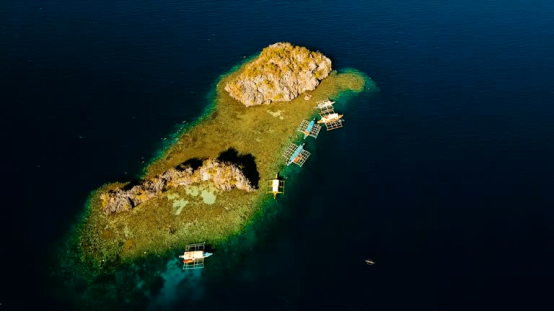
The genesis of the world’s most breathtaking remote island chains begins deep beneath the ocean floor. Archipelagic geology is largely driven by the continuous and violent interactions of the Earth’s tectonic plates and stationary thermal anomalies known as volcanic hotspots. Unlike island arcs that form at subduction zones where one plate dives beneath another, hotspot archipelagos are created in the middle of tectonic plates. As a tectonic plate drifts over a stationary mantle plume—a column of superheated magma rising from the Earth’s core-mantle boundary—the magma punches through the crust to form a massive underwater volcano. Over millions of years of successive eruptions, this seamount breaches the ocean surface to become a volcanic island.
The Conveyor Belt Mechanism of Island Chains
The most iconic example of hotspot geology is the Hawaiian-Emperor seamount chain. Because the tectonic plate is in constant motion while the mantle plume remains relatively fixed in place, the process acts like a geological conveyor belt. The active volcano is eventually carried away from the magma source, cutting off its supply and rendering it extinct. Meanwhile, a new volcano begins to form behind it. This multi-million-year cycle creates a linear sequence of islands, where the chronological age of the landmasses increases the further they are from the active hotspot. This geological reality dictates the topography, soil composition, and eventual subsidence of the islands as they slowly erode and sink back into the ocean as atolls and guyots.
- Mantle Plumes: Columns of abnormally hot rock rising through the Earth’s mantle, responsible for intra-plate volcanic activity.
- Seamounts and Guyots: Underwater mountains that have either not yet breached the surface or have eroded and subsided below sea level over millions of years.
- Tectonic Drift: The movement of the lithospheric plates that carries newly formed islands away from their fiery origins, dictating the linear structure of archipelagos.
Understanding this geological foundation is critical because the age and topography of a volcanic island directly influence its climate, soil fertility, and the evolutionary pathways of the species that eventually colonize it. Older islands typically feature heavily eroded, dramatic ravines and deep valleys, creating isolated pockets that further drive biological divergence.

Coastal Protectors: The Formation and Anatomy of Barrier Islands
While volcanic archipelagos are born from the Earth’s internal fires, barrier islands are dynamic, ever-changing landforms sculpted by wind, waves, and ocean currents. These are long, narrow offshore deposits of sand and sediment that run parallel to the mainland coast. Separated from the mainland by shallow sounds, bays, or lagoons, barrier islands serve as the first line of defense against the relentless energy of the ocean, absorbing the devastating impacts of hurricanes, storm surges, and high winds.
Sediment Deposition and Longshore Drift
The formation of barrier islands is a complex interplay of post-glacial sea-level rise and coastal sediment transport. As the last Ice Age concluded and glaciers melted, rising sea levels flooded river valleys and coastal plains, isolating ridges of sand dunes and creating offshore islands. Today, these islands are maintained and continuously reshaped by a process called longshore drift. Ocean waves strike the coastline at an angle, picking up sand and depositing it further down the beach in a zigzag pattern. This constant movement means that barrier islands are not stationary; they are migrating landforms that roll over themselves, retreating landward as sea levels rise and storms push sand from the ocean side to the bay side.
| Geological Feature | Volcanic Archipelagos | Barrier Islands |
|---|---|---|
| Primary Formation Mechanism | Mantle plumes and tectonic plate movement | Sediment accumulation and longshore drift |
| Material Composition | Basaltic rock, hardened lava, volcanic ash | Sand, gravel, pulverized shells, loose sediment |
| Geographic Location | Open ocean basins, mid-plate regions | Parallel to mainland coastal plains |
| Lifespan and Stability | Millions of years; slow erosion and subsidence | Highly dynamic; constantly shifting over decades |
The anatomy of a barrier island is divided into distinct ecological zones, each supporting specialized flora and fauna. The ocean beach endures constant pounding from surf and high salinity. Just inland, the dune zone is stabilized by deep-rooted vegetation like sea oats, which trap windblown sand. Behind the dunes lies the barrier flat, a protected area that can support maritime forests. Finally, the bay-side salt marsh is a highly productive estuarine environment that serves as a crucial nursery for marine life and migratory birds.

Ocean Currents and the Shaping of Island Microclimates
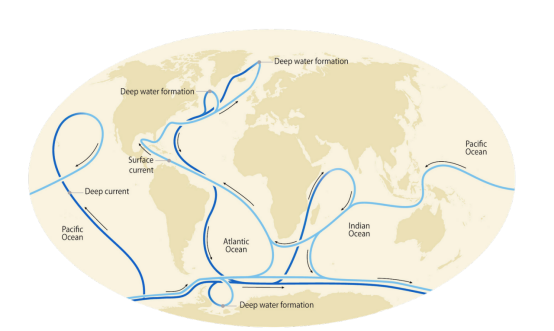
The geographic isolation of an island is only one part of its ecological story; the surrounding ocean dictates its atmospheric conditions. Ocean currents act as massive global conveyor belts, transporting warm water from the equator toward the poles and cold water from the poles back to the tropics. When these immense oceanic rivers encounter island landmasses, they profoundly alter local temperatures, humidity levels, and precipitation patterns, resulting in astonishing microclimate diversity within relatively small geographic areas.
Thermohaline Circulation and Topographic Rain Shadows
Islands bathed in warm ocean currents, such as those in the Caribbean or the South Pacific, experience elevated humidity and frequent rainfall, fostering lush tropical rainforests. Conversely, islands situated in the path of cold currents, like the Galápagos Islands influenced by the Humboldt Current, exhibit surprisingly arid, desert-like conditions despite their equatorial location. The cold water cools the air above it, reducing evaporation and preventing the formation of rain clouds.
- Windward vs. Leeward Dynamics: Trade winds carrying moisture off the ocean hit the mountainous terrain of volcanic islands. The air is forced upward, cools, and releases heavy precipitation on the windward side.
- The Rain Shadow Effect: As the now-dry air descends on the opposite side of the mountains (the leeward side), it creates arid, desert-like microclimates just miles away from dense rainforests.
- Elevation Gradients: High-altitude islands experience a drop in temperature with elevation, allowing alpine ecosystems to thrive thousands of feet above tropical coastal beaches.
This immense climatic variation within a single island or archipelago creates a mosaic of fragmented habitats. A single volcanic island can host a coastal desert, a mid-elevation cloud forest, and a freezing alpine summit. These distinct microclimates act as invisible geographic barriers, isolating populations of flora and fauna and setting the stage for rapid evolutionary divergence.

Island Biogeography: The Laboratory of Evolution
To understand how life populates these isolated and climatically diverse geological formations, scientists rely on the Theory of Island Biogeography. Pioneered in the 1960s by ecologists Robert MacArthur and E.O. Wilson, this foundational ecological model explains the factors that dictate species richness in isolated habitats. The theory posits that the number of species on an island represents a dynamic equilibrium between the rate of immigration of new species and the rate of extinction of existing ones.
The Distance and Area Effects
The mathematical elegance of Island Biogeography relies on two primary variables: the size of the island and its distance from the mainland (or source population). The Distance Effect dictates that islands closer to continental landmasses will receive a higher influx of colonizing species—carried by wind, ocean currents, or migratory birds—compared to remote archipelagos. The Area Effect asserts that larger islands can support larger populations and a wider variety of habitats, thereby significantly lowering the probability of extinction.
When a remote island emerges from the sea via volcanic activity, it is entirely sterile. The colonization process is a lottery of survival. Plant seeds arrive via oceanic drift or bird droppings; insects are blown in by violent storms; small reptiles may wash ashore on rafts of floating vegetation. Because mammals require substantial food and fresh water to survive oceanic crossings, remote islands are typically devoid of native terrestrial mammals, leaving birds, reptiles, and insects as the dominant pioneering species. This unique initial cast of characters completely alters the traditional ecological hierarchy found on mainlands.

Adaptive Radiation and Endemism in Remote Archipelagos
Once pioneering species successfully colonize an isolated island, they encounter an environment radically different from their mainland origins. Without the intense competition and predatory pressures they previously faced, these survivors experience an evolutionary phenomenon known as adaptive radiation. This is the rapid diversification of a single ancestral species into a multitude of new forms, each adapting to fill a specific, previously empty ecological niche.
Evolutionary Marvels: Gigantism, Dwarfism, and Flightlessness
The Galápagos finches, famously studied by Charles Darwin, are the textbook example of adaptive radiation. A single flock of ancestral finches arrived on the archipelago and, over generations, splintered into numerous distinct species. Some developed heavy, crushing beaks for cracking seeds, while others evolved slender, probing beaks for extracting insects from bark. Because the islands offered varied microclimates and food sources without competing bird species, the finches radiated to exploit every available resource.
- Loss of Dispersability: In the absence of ground predators, many island birds (like the Dodo of Mauritius or the Kiwi of New Zealand) evolved flightlessness. Flying requires immense energy, and without the need to escape predators, natural selection favored birds that reallocated that energy to size and reproduction.
- Insular Gigantism: Small mainland animals, such as rodents or reptiles, often evolve into massive sizes on islands due to the lack of large predators and abundant resources (e.g., the Galápagos giant tortoise).
- Insular Dwarfism: Conversely, large mainland animals may shrink over evolutionary time on islands due to restricted food supplies and limited territory, ensuring the survival of populations that require fewer calories.
This extreme isolation and highly specialized adaptation lead to extraordinary levels of endemism. An endemic species is one that is found nowhere else on Earth. While this makes island ecosystems incredibly unique and scientifically valuable, it also makes them exceptionally fragile. Species that have evolved in a biological vacuum lack the defensive mechanisms necessary to survive sudden changes in their environment.

Ecological Vulnerability: Threats to Island Environments
The very mechanisms that make island ecosystems so unique—extreme isolation, specialized microclimates, and highly adapted endemic species—also render them highly susceptible to external disruptions. Today, both volcanic archipelagos and barrier islands are facing unprecedented existential threats driven primarily by human activity and accelerated global climate change. Because island species have evolved in closed systems without natural predators or competitors, the introduction of foreign elements can cause catastrophic ecological collapse.
Invasive Species and Habitat Destruction
The introduction of invasive species is arguably the most devastating immediate threat to island biodiversity. Feral cats, rats, pigs, and goats, brought by human explorers and settlers, have decimated endemic populations. Ground-nesting birds, which lost the ability to fly due to millions of years of predator-free evolution, are defenseless against introduced mammals. Similarly, invasive plant species can quickly outcompete native flora, fundamentally altering the fragile microclimates and destroying the primary food sources for endemic insects and herbivores.
Furthermore, the physical structure of coastal and barrier islands is under siege from rising sea levels and increased storm intensity. Barrier islands naturally migrate and adapt to slow sea-level changes, but the current rapid rate of climate change, combined with human infrastructure (such as seawalls and paved roads) that prevents natural sand migration, threatens to drown these vital coastal protectors. When barrier islands erode, the mainland salt marshes and coastal communities lose their primary buffer against oceanic fury.

Conservation Strategies for Unique Island Worlds
Protecting the geological integrity and biological diversity of the world’s islands requires aggressive, multi-faceted conservation strategies. Because island ecosystems are geographically defined and relatively small, they are actually ideal candidates for highly targeted conservation interventions. When strict protective measures are implemented, island habitats can demonstrate remarkable resilience and capacity for recovery.
Eradication, Restoration, and Marine Protection
One of the most successful conservation tactics in island biogeography is the systematic eradication of invasive species. By completely removing feral predators and invasive herbivores from remote islands, conservationists have witnessed the dramatic rebound of endemic bird and plant populations. These eradication programs, while logistically complex and resource-intensive, provide an immediate lifeline to species on the brink of extinction.
- Marine Protected Areas (MPAs): Establishing vast no-take zones around archipelagos protects the surrounding coral reefs and ocean currents that sustain the island’s microclimates and marine biodiversity.
- Barrier Island Renourishment: For coastal barrier islands, strategic sand replenishment and the restoration of natural dune vegetation help maintain their structural integrity against storm surges and rising tides.
- Biosecurity Protocols: Strict quarantine and biosecurity measures at ports and airports are essential to prevent the accidental introduction of new invasive pathogens, insects, or mammals to pristine island environments.
Ultimately, the preservation of island ecosystems demands a global commitment to mitigating climate change. By reducing greenhouse gas emissions, we can slow the sea-level rise that threatens to inundate low-lying atolls and barrier islands, and stabilize the ocean temperatures that drive the delicate microclimates essential for endemic survival. The laboratory of evolution must be protected not just for its scientific value, but for the inherent wonder of its unparalleled biodiversity.
Frequently Asked Questions (FAQ)
- What is the difference between a volcanic island and a barrier island?
- Volcanic islands are formed by tectonic activity and magma erupting from the ocean floor, often creating steep, rocky, and permanent landmasses in the open ocean. Barrier islands are formed by the accumulation of sand and sediment parallel to mainland coasts, shaped by ocean currents and longshore drift, making them highly dynamic and constantly shifting.
- How do ocean currents affect an island’s climate?
- Ocean currents transport warm or cold water across the globe. Warm currents increase local air temperature and humidity, leading to heavy rainfall and lush vegetation. Cold currents cool the air, preventing evaporation and cloud formation, which can create arid, desert-like conditions even on tropical islands.
- What is the Theory of Island Biogeography?
- Developed by MacArthur and Wilson, this ecological theory explains that the biodiversity of an island is determined by its size (Area Effect) and its distance from the mainland (Distance Effect). Larger, closer islands have higher immigration rates and lower extinction rates, resulting in greater species richness.
- Why do animals evolve differently on isolated islands?
- Isolated islands often lack large predators and competing species. This biological vacuum allows pioneering species to undergo adaptive radiation, evolving rapidly to fill empty ecological niches. This isolation frequently leads to unique traits like flightlessness in birds, insular gigantism, or insular dwarfism.
- Why are barrier islands important to mainland coasts?
- Barrier islands act as a natural shock absorber for the mainland. They bear the brunt of oceanic energy, absorbing the impact of storm surges, high winds, and massive waves during hurricanes, thereby protecting mainland coastal communities and delicate estuarine ecosystems like salt marshes.