The Mechanics of Tectonic Evolution
The surface of our planet is in a state of perpetual flux, driven by the internal heat of the Earth and the movement of massive lithospheric plates. This plate tectonics theory explains the formation of the world’s most dramatic features, from the majestic Himalayan peaks to the deep-seated rift valleys. When plates collide, diverge, or slide past one another, they create the structural foundations upon which all other erosional processes work.
Horsts and Grabens: The Symbiotic Philosophy
Often misunderstood as simple destruction, the process of faulting creates a complex, rhythmic landscape. A horst represents an uplifted block of crust, while a graben is the depressed block between two faults. This structural division is essential for basin development and mineral deposition.
- Tensional Forces: When the Earth’s crust is pulled apart, it stretches and fractures, creating the characteristic “stepped” landscape of basins and ranges.
- Symbiotic Development: The elevation of a horst is relative to the dropping of a graben, ensuring that the total surface area remains balanced in terms of crustal stress.

The Sculpting Power of Water
Water is the most prolific architect on Earth. From the slow, steady abrasion of riverbeds to the high-energy impact of oceanic waves, liquid water constantly reshapes our topography. Canyons, for instance, are not merely voids in the earth; they are geological records carved over millions of years by the relentless persistence of flowing rivers.
Alluvial Fans: Traces of Time
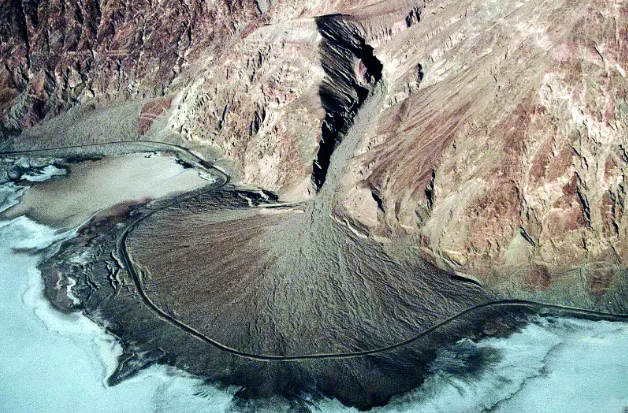
As rivers exit mountainous regions and enter flat plains, their velocity drops, causing them to deposit sediment in a fan-shaped pattern known as an alluvial fan. These structures serve as historical archives, preserving the climatic and tectonic history of the surrounding drainage basin.
Coastal Metamorphosis
Coastlines are the frontline of the battle between land and sea. Tides and waves continuously reconfigure the shoreline, creating features such as sea arches, stacks, and cliffs. The structural integrity of the rock—whether igneous, sedimentary, or metamorphic—determines how quickly these features evolve.

Aeolian Processes and the Wind’s Carving Knife
In arid environments, where vegetation is sparse and water is rare, the wind becomes the primary sculptor. The process of aeolian erosion—involving deflation and abrasion—can transform solid rock into surreal, artistic formations. The Yadan landforms, characterized by parallel ridges and grooves, are a prime example of wind-sculpted art that reflects the prevailing wind directions over millennia.
The Namib Desert: A Study in Sand
The Namib Desert showcases the dynamic nature of wind-formed landscapes. Here, the movement of sand dunes is not random but follows specific physical laws governed by wind speed, grain size, and moisture levels. These shifting “sand seas” represent one of the most volatile and beautiful terrains on our planet.

Climatic Influence on Landform Diversity
Climate acts as a catalyst for erosion. The interaction between temperature, precipitation, and biological activity creates distinct “geomorphic regimes.”
| Climate Type | Dominant Landform | Primary Process |
|---|---|---|
| Arid | Dunes, Yardangs | Wind Abrasion |
| Humid/Tropical | Karst, Caves | Chemical Weathering |
| Glacial | U-shaped Valleys | Mechanical Plucking |
Frequently Asked Questions (FAQ)
- Q1: How do canyons form over time?
- Canyons are primarily formed by the downward incision of rivers into bedrock. This process is accelerated by the river’s load (sediment) acting as an abrasive tool, combined with the uplift of the surrounding tectonic plate, which increases the river’s gradient and cutting power.
- Q2: What is the difference between weathering and erosion?
- Weathering is the stationary breakdown of rocks into smaller particles (physical or chemical), while erosion is the process of transporting these particles away from their original location through agents like wind, water, or ice.
- Q3: Why do some landforms look like “alien ruins”?
- Many strange-looking landforms, such as those found in karst landscapes or Yadan regions, are the result of differential erosion. Softer rock layers erode faster than harder, more resistant layers, leaving behind bizarre, sculptural shapes that often resemble creatures or ancient architecture.
- Q4: How does plate movement create mountains?
- Mountains are typically formed at convergent plate boundaries. When two continental plates collide, the crust is compressed, folded, and thrust upward, creating vast mountain ranges like the Himalayas or the Andes.