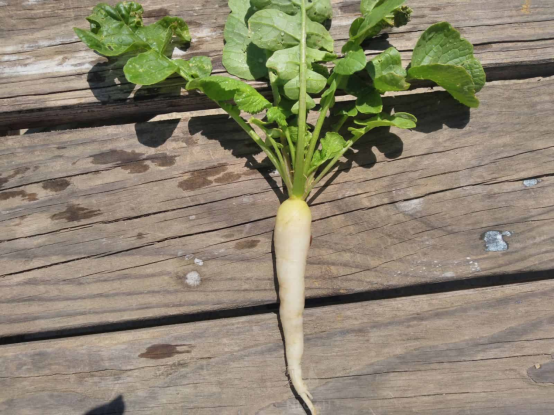
White radishes, particularly the Daikon variety, are prized for their crisp texture and mild flavor. However, many gardeners struggle with structural defects such as internal hollowness or external cracking. These issues are rarely the result of poor seed quality; rather, they are physiological responses to environmental stress and improper cultivation management. Understanding the biological requirements of the radish root system is the first step toward a successful harvest.
Essential Soil Preparation and Environmental Conditions
The foundation of a high-quality radish lies beneath the surface. White radishes require deep, loose, and well-drained soil to expand without resistance. If the soil is too compact or contains large stones, the roots will likely deform or split as they struggle to penetrate the earth.
Soil Texture and Depth
A sandy loam is the ideal medium for radish cultivation. This soil type provides the perfect balance of aeration and moisture retention. Before planting, it is critical to till the soil to a depth of at least 12 to 18 inches, depending on the specific variety’s expected length.
Optimal pH and Temperature
White radishes thrive in slightly acidic to neutral soil with a pH between 6.0 and 7.0. Furthermore, they are strictly cool-season crops. High temperatures during the root-bulbing stage often trigger “bolting” (premature flowering) or cause the roots to become woody and bitter.

Advanced Watering and Nutrient Management
Consistency is the most important factor in preventing root cracking. When a radish experience a dry spell followed by heavy watering or rain, the inner cells expand faster than the outer skin, leading to deep vertical cracks.
The Golden Rule of Irrigation
Maintain a consistent moisture level—the soil should feel like a wrung-out sponge. Avoid the “flood and drought” cycle. Mulching around the plants can significantly help in stabilizing soil moisture and temperature.
Nutrient Balancing to Prevent Hollowness
Hollowness, or “pithiness,” is often caused by excessive nitrogen or rapid growth spurred by high temperatures. While nitrogen is necessary for leaf development, an overabundance late in the cycle forces the plant to grow too quickly for its vascular system to support.
- Phosphorus: Essential for strong root development.
- Potassium: Critical for cellular wall strength and sugar transport.
- Boron: A trace element deficiency in boron is a leading cause of internal browning and hollowness in root crops.
Troubleshooting Common Growth Defects: Cracking and Hollowness
To achieve professional results, gardeners must be able to diagnose and prevent physiological disorders before they ruin the crop.
| Issue | Primary Cause | Management Strategy |
|---|---|---|
| Root Cracking | Fluctuating soil moisture | Consistent irrigation and mulching |
| Hollowness (Pithiness) | Late-stage nitrogen or heat | Balanced N-P-K and cool-season planting |
| Forked Roots | Compact soil or fresh manure | Deep tilling and well-composted organic matter |
| Bitterness | Water stress or high heat | Ensure rapid growth and adequate shade |
Expert Tip: The “Finger Test”
Insert your finger two inches into the soil. If it feels dry at that depth, it is time to water. Do not wait for the leaves to wilt, as wilting indicates the plant is already in a state of stress that could lead to pithiness.
展
Professional Harvesting and Post-Harvest Storage
Timing is everything. A radish left in the ground too long will almost certainly become hollow and fibrous. Most white radish varieties are ready for harvest 50 to 70 days after sowing.
Signs of Maturity
Check the diameter of the root “shoulder” at the soil line. If it meets the variety’s specifications (usually 2-3 inches for standard Daikon), it is ready. Pull one test radish to check for crispness before harvesting the entire crop.
Storage Techniques
To maintain juiciness after harvest, remove the green tops immediately. The leaves continue to draw moisture from the root even after it is pulled from the ground. Store the roots in a cool, humid environment, such as a root cellar or the crisper drawer of a refrigerator wrapped in a damp cloth.
Frequently Asked Questions (FAQ)
- Why are my white radishes extremely spicy and bitter?
- Bitterness is usually caused by slow growth or high temperatures. When a radish grows slowly due to lack of water or excessive heat, it accumulates higher concentrations of mustard oils (isothiocyanates). Ensure the plant grows quickly with plenty of water and cool weather.
- Can I use fresh manure to fertilize my radish bed?
- No. Fresh manure is too high in nitrogen and can contain pathogens. More importantly, the high salt content and active decomposition can cause the roots to fork or “burn,” leading to poor texture. Always use well-aged compost.
- What causes the “black heart” or internal browning in radishes?
- This is often a sign of Boron deficiency or a calcium imbalance caused by irregular watering. Adding a small amount of seaweed extract or a balanced micronutrient fertilizer can help prevent this.
- How do I prevent radishes from bolting?
- Bolting is triggered by long days and temperatures rising above 80°F (27°C). To prevent this, plant as early as possible in the spring or, ideally, in the late summer for a fall harvest when temperatures are declining.